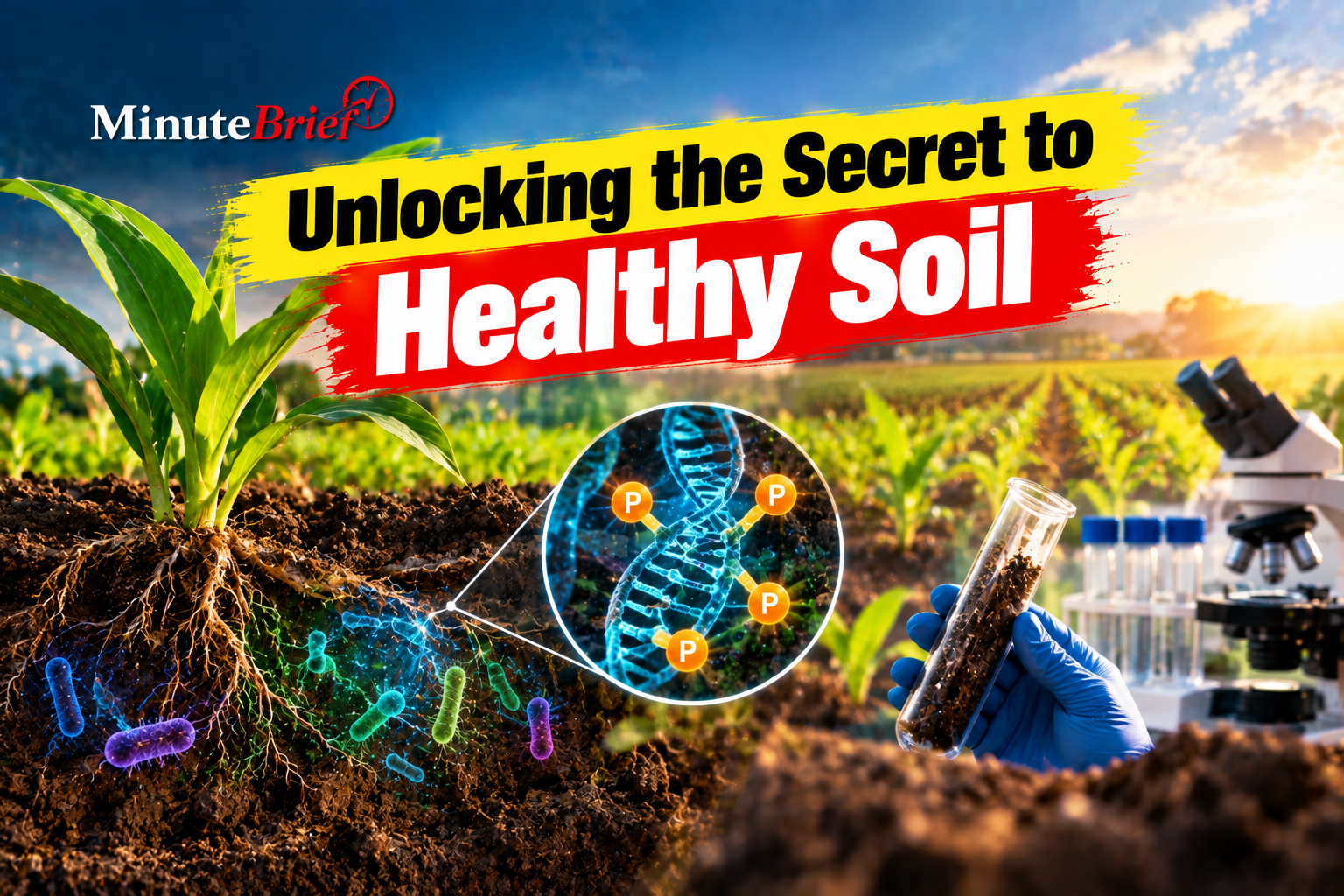
Phosphorus is essential for plant growth and global food production, but the Earth's natural reserves are strictly limited. To keep crops growing sustainably, agricultural scientists need to understand how phosphorus is stored, transformed, and recycled in the soil.
Now, research published in the Journal of Agricultural and Marine Sciences introduces a simpler, less expensive way to measure a specific, biologically active form of the nutrient: DNA-bound phosphorus (DNA-P).
What Is DNA-Bound Phosphorus?
In soil ecosystems, phosphorus doesn't just sit in static mineral deposits. A portion of it is tied up inside the DNA of living soil microorganisms. As these microbes live, reproduce, and die, they continuously process and release nutrients back into the dirt.
Because DNA-P is directly tied to living soil life, measuring it provides researchers with a clear window into the active, biological side of the soil's phosphorus cycle.
Streamlining the Science
Historically, testing for DNA-P required complex and costly laboratory procedures. An international research team—including scientists from Sultan Qaboos University and the James Hutton Institute—set out to refine the process using 32 different soil types across the UK.
They discovered two major keys to streamlining the test:
- Removing Unnecessary Steps: The team found that lengthy enzyme treatments previously thought essential could be eliminated entirely, making the procedure faster, easier, and much cheaper.
- Keeping Key Filters: They confirmed that an ultrafiltration step remains crucial. This process separates DNA-bound phosphorus from other phosphorus compounds, protecting the test's accuracy.
What the Results Reveal About Soil Health
Although DNA-P makes up only a small fraction of the total organic phosphorus in soil, its presence is strongly linked to key health indicators, including soil pH, organic matter content, microbial biomass, and dissolved phosphorus levels.
These strong connections suggest that DNA-P acts as an indicator of active, microbial nutrient cycling rather than long-term, locked-away reserves.
Why It Matters for Sustainable Farming
With global agriculture facing mounting pressure to reduce environmental runoff and use finite fertilizers more efficiently, understanding how soil microbes feed plants is crucial.
By giving scientists a practical tool to track active phosphorus, this streamlined test could lead to smarter fertilizer management, better soil health assessments, and more sustainable crop production methods worldwide.