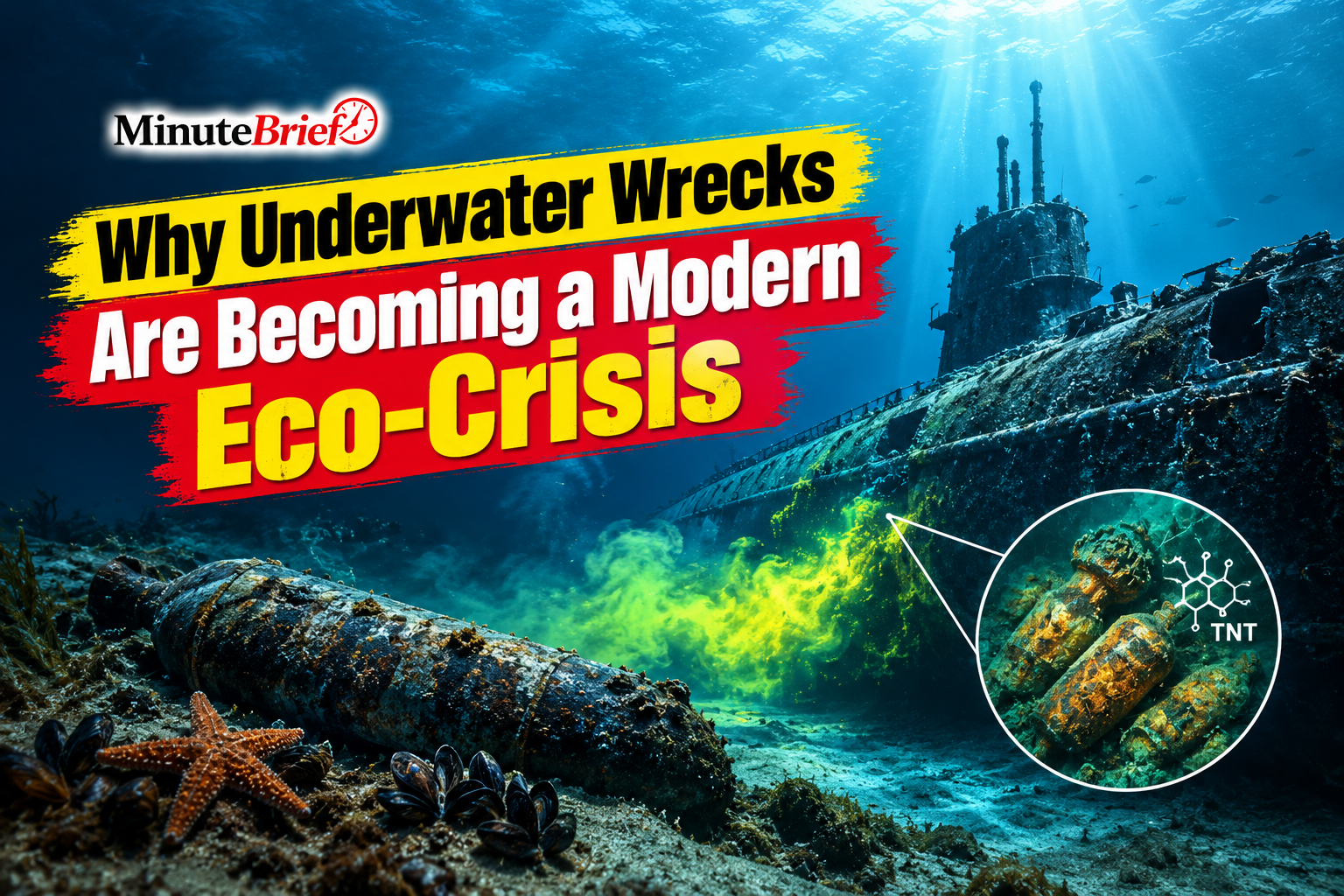
A World War I German submarine resting at the bottom of the North Sea is continuing to release explosive pollutants into the marine environment, according to researchers at Aarhus University.
In April 1917, the submarine UC-30 sank off the coast of Denmark after striking a British mine, taking all 27 crew members down with it. Packed with 18 mines and six torpedoes, the vessel lay forgotten until its discovery in 2016.
Key Findings from the Seabed
- Widespread Contamination: Researchers working with Danish Navy divers collected water, sediment, starfish, and mussel samples from around the wreck, discovering clear traces of TNT leaking into the local ecosystem.
- A Growing Environmental Threat: Scientists warn that as the submarine continues to corrode, more explosive material will be exposed, worsening the localized pollution.
- Thousands of Similar Shipwrecks: In a report for the Danish Environmental Protection Agency, researchers identified over 10,000 shipwrecks in Danish waters alone—roughly 15% of which date back to the World Wars.
Why Cleanup Isn't Simple
While retrieving or neutralizing submerged munitions seems like the obvious fix, experts note that underwater detonations can actually scatter contaminants further and cause more environmental damage.
To find safer solutions, scientists are testing seafloor-crawling robots to map, monitor, and potentially retrieve hazardous explosives. However, for wrecks that are already buried in sand, leaving them alone may remain the safest choice, as the sediment acts as a natural shield against further contamination.