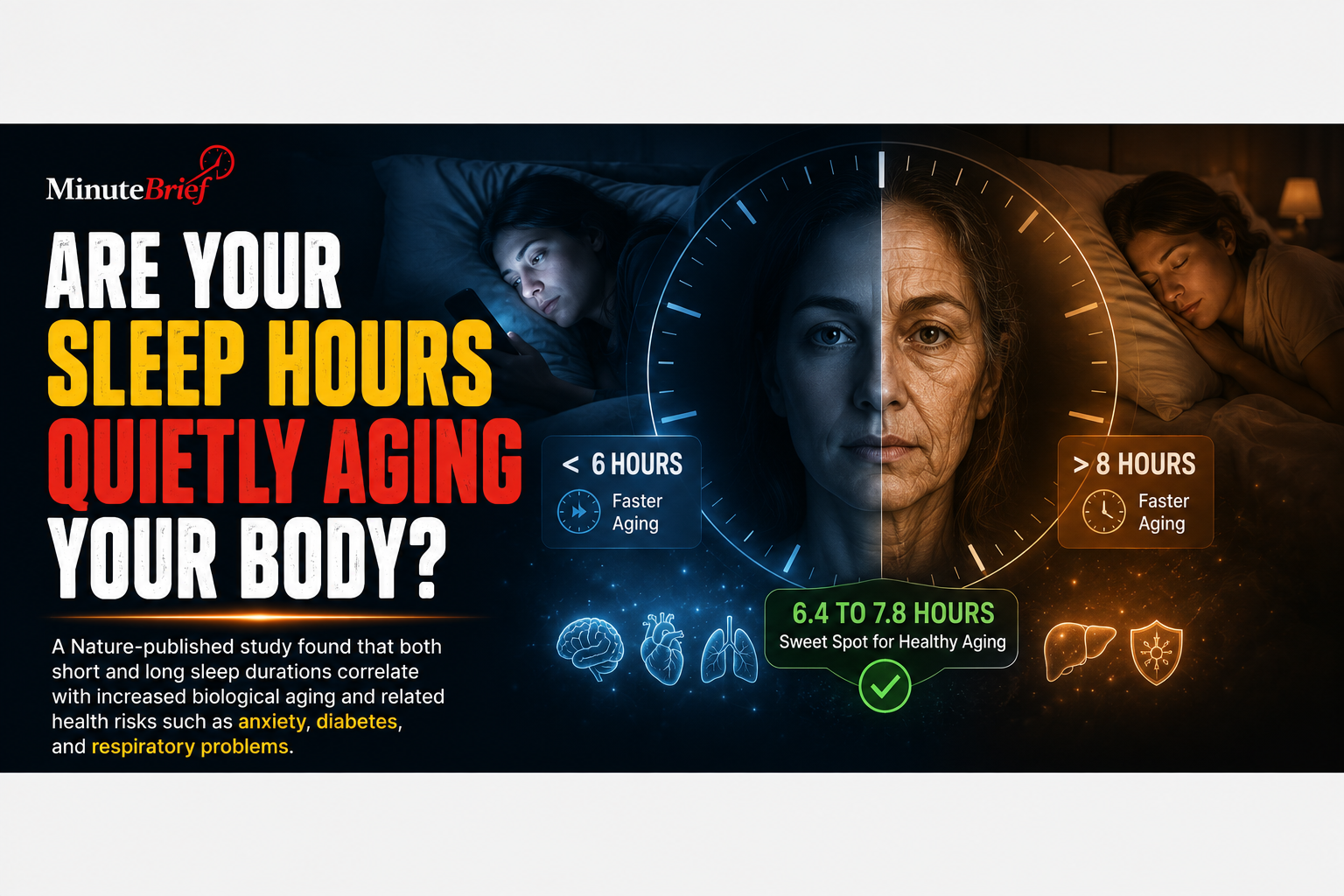
A major study from Columbia University Irving Medical Center published in Nature reveals that sleep duration is directly tied to how quickly your body ages. By analyzing 23 biological aging clocks across 17 organ systems in nearly half a million adults, researchers found that both sleeping too little and sleeping too much correlate with faster biological aging across almost the entire body.
- The "Sweet Spot": The lowest levels of biological aging were consistently found in people getting 6.4 to 7.8 hours of daily sleep.
- Whole-Body Aging: Both short sleep (<6 hours) and long sleep (>8 hours) were linked to accelerated aging in major organs, including the brain, heart, lungs, liver, and immune system.
- Disease Risk: Short sleep strongly correlated with anxiety, depression, obesity, diabetes, and heart disease. Both extremes were tied to respiratory conditions (like asthma) and digestive issues (like acid reflux).
Why It Matters
Instead of just tracking calendar age, biological clocks measure the actual health of individual organs. While the study shows an association rather than direct causation, it proves sleep plays a vital role in your overall physiology—suggesting sleep management strategies should be tailored depending on whether someone sleeps too much or too little.
Source: Science Daily