In Brief
- Two captive-bred Great Indian Bustards released into the Rajasthan wild.
- The release marks a key phase in conservation to save the species.
- Experts will monitor survival and reproduction without human aid.
- Efforts aim to revive the population of this critically endangered bird.
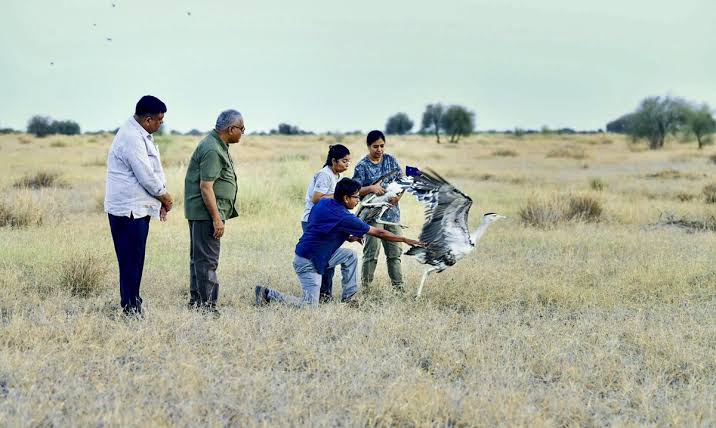
Authorities in Rajasthan released two captive-bred Great Indian Bustards into the wild Desert National Park in Jaisalmer, their natural habitat, on October 4, 2026. This marks an important milestone in the ongoing conservation program aimed at saving one of the world's most endangered bird species.
The Great Indian Bustard population has been critically low, with wild numbers dwindling due to habitat loss and poaching. Captive breeding was initiated to boost population numbers and reintroduce birds into the wild.
Experts will closely monitor the released birds to assess their ability to survive and reproduce independently. This phase is crucial to determine the success of captive breeding and future conservation strategies. The release in Rajasthan reflects concerted efforts by wildlife authorities and conservationists to prevent the species from becoming extinct. It also highlights the challenges faced in protecting the Great Indian Bustard amid ongoing environmental threats.