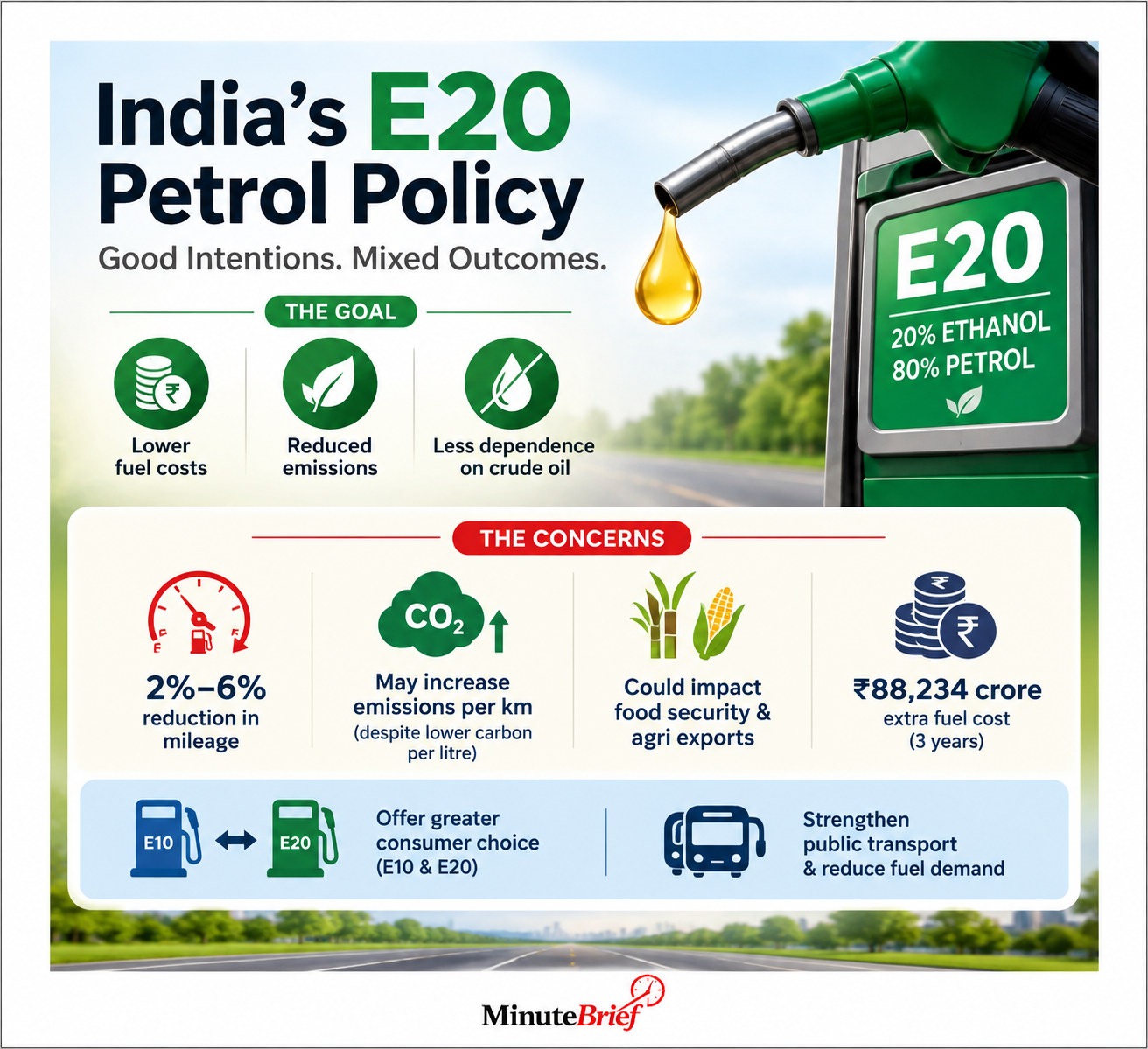
India’s E20 petrol policy, blending 20% ethanol with 80% gasoline, was introduced to reduce fuel costs, emissions, and dependence on crude oil. However, the reduced mileage associated with E20 has raised concerns about these benefits. Road Transport Minister Nitin Gadkari acknowledged a 2%–6% reduction in fuel economy. Analysis cited in the article estimates that consumers spent ₹88,234 crore more over three years due to increased fuel consumption.
The environmental benefits remain uncertain. Although ethanol has lower carbon content per litre, a 4%–6% mileage decline could increase emissions per kilometre. Additionally, diverting sugarcane and maize to ethanol production may impact food security, domestic supplies, and agricultural exports, potentially offsetting foreign-exchange savings from reduced crude imports.
The article highlights these wider economic costs of the E20 policy and suggests offering greater consumer choice between E10 and E20. It also recommends strengthening public transport and implementing other measures to reduce fuel demand.