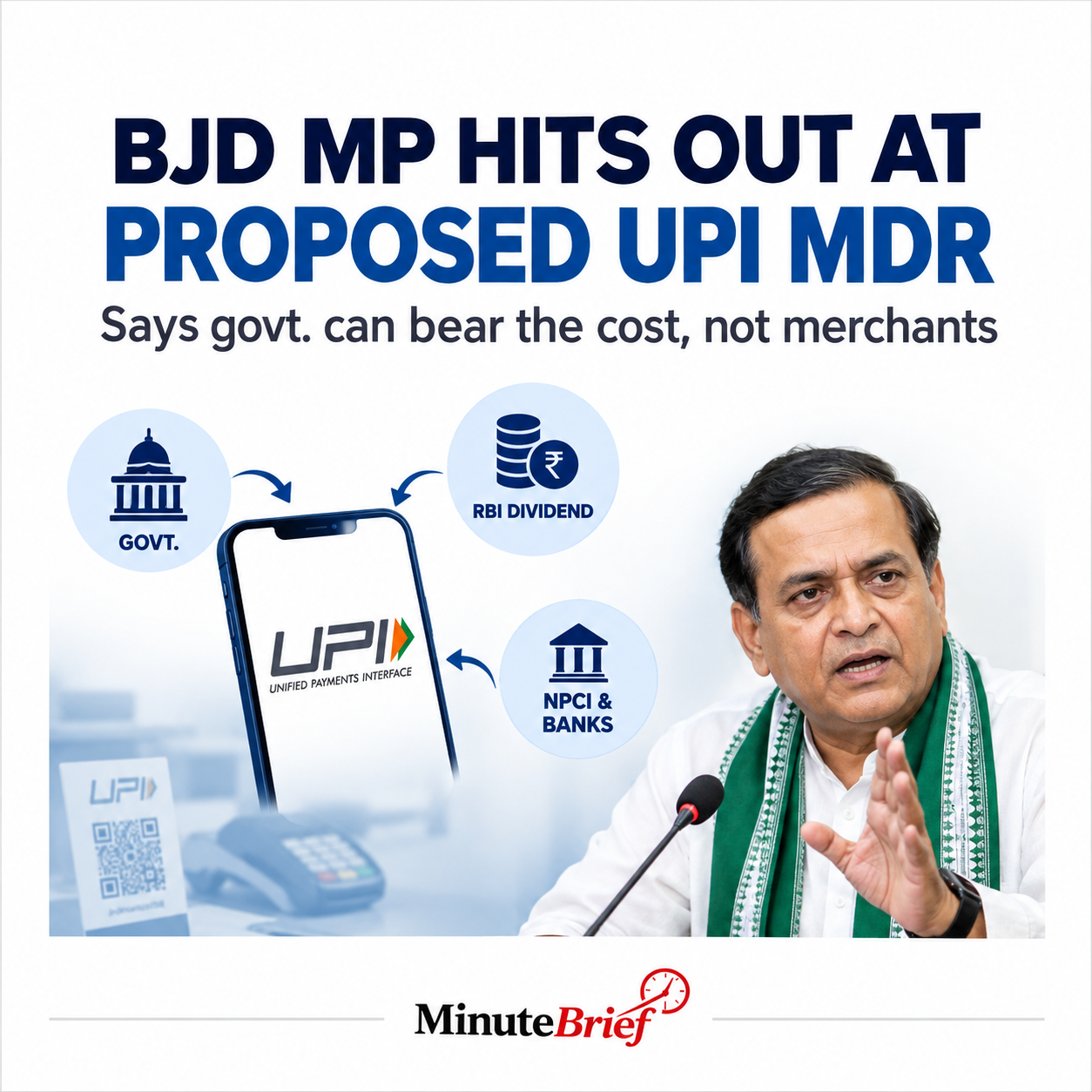
BJD MP Santrupt Misra has expressed concerns over the proposed 0.4% merchant discount rate (MDR) on person-to-merchant UPI transactions above ₹2,000. He argued that the cost of maintaining India’s digital-payment infrastructure could be funded through alternative means instead of burdening merchants. Misra suggested that the government could bear the cost of maintaining the UPI network, considering its increasing significance to the country’s digital economy.
He referenced the ₹2.86 lakh crore dividend transferred by the RBI to the Centre in 2025–26, stating that a small portion of this sum could be allocated to digital-payment infrastructure. Misra also highlighted the role of the National Payments Corporation of India (NPCI), which operates UPI and is backed by major banks and digital-payment platforms as shareholders and promoters. These institutions, he suggested, could also contribute to sustaining the payment network.
Further, Misra noted that banks associated with NPCI posted profits of around ₹2.5 lakh crore last year. He suggested that even a minor contribution from these banks could support UPI infrastructure. He warned that introducing the MDR might increase financial pressure on merchants, who may have to absorb the additional charge by reducing profit margins or pass it on to consumers.
These comments come amid broader discussions on sustainably funding UPI while maintaining its accessibility and widespread adoption. Since UPI plays a major role in India’s digital-payment ecosystem, the debate focuses on balancing the cost of operating and expanding the network with the goal of keeping digital transactions affordable for merchants and consumers.