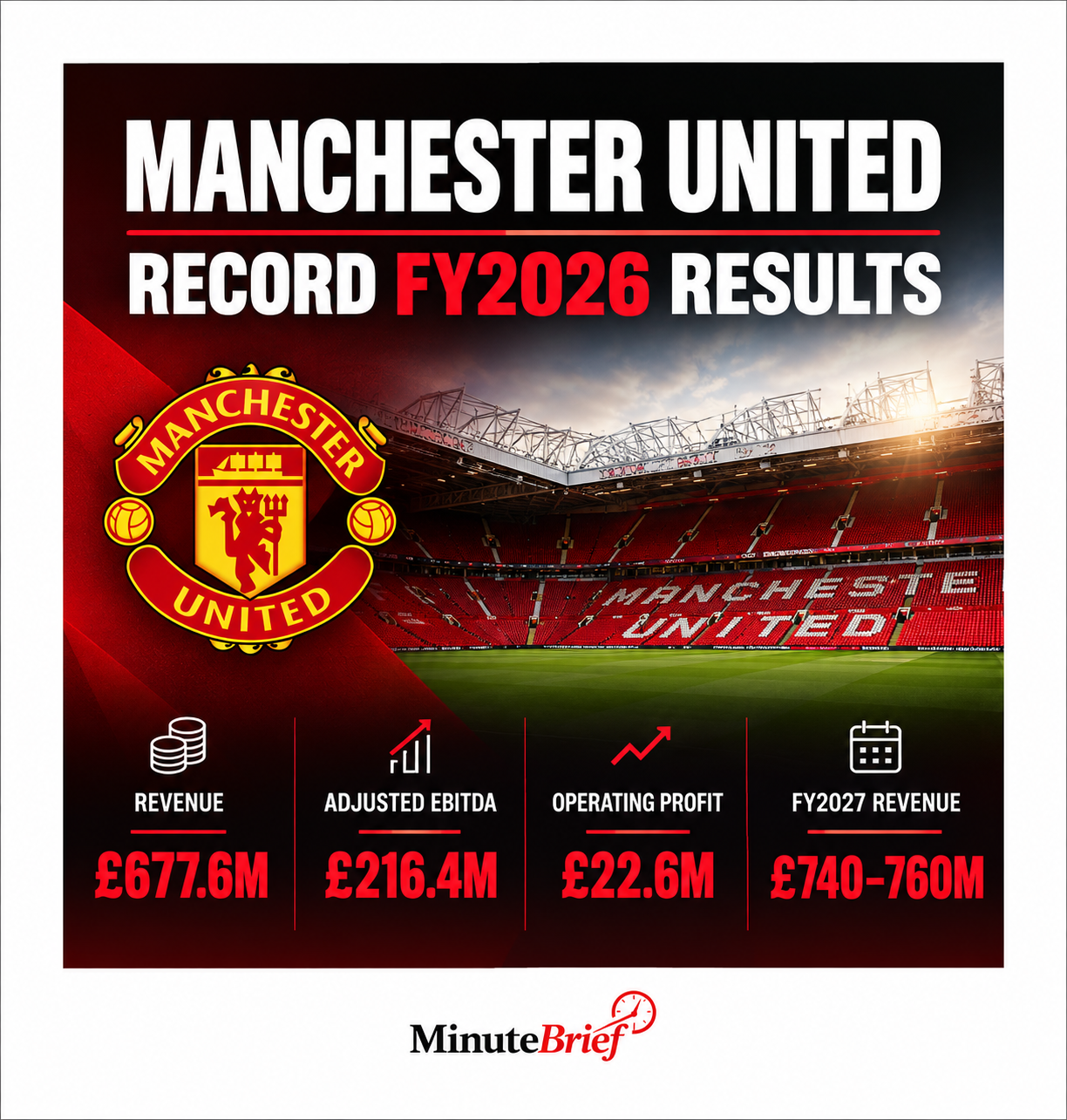
Manchester United posted a record fiscal 2026 despite missing Champions League football, highlighting its strong commercial operations and global fanbase. The club generated £677.6 million in revenue and £216.4 million in adjusted EBITDA, surpassing Jefferies' estimates of £665 million and £210 million. It also returned to an operating profit of £22.6 million, reversing an £18.4 million operating loss the previous year.
This came despite the loss of Champions League-related income, a key revenue source for top European clubs. Broadcasting played a major role in the improved performance, with fourth-quarter broadcasting revenue rising 28.4% to £49.7 million, boosted by Manchester United's third-place Premier League finish, up from 15th the prior season.
However, sponsorship revenue dropped 26.2% in the fourth quarter and 14.8% for the full year, mainly due to the Tezos partnership ending. New deals with SumUp and Betway have since filled these spots, supporting future commercial income. Overall commercial revenue fell 18.1% to £72.2 million in the quarter, while retail and merchandise decreased 7% to £34.4 million. The club also improved finances through cost control.
Full-year operating expenses declined 4.3% to £701.9 million, with employee costs down 3.6% to £302 million, representing 44.6% of revenue, compared to 47% previously. This expanded the adjusted EBITDA margin by approximately 450 basis points to 31.9%. Fourth-quarter employee expenses rose to 52.3% of revenue due to higher Champions League bonuses and squad costs as the club returned to European competition.
Manchester United advanced its proposed 100,000-seat stadium project by securing the necessary land, spending £85.9 million on property, plant, and equipment, including £63.5 million for stadium land. While acquisition is a key milestone, design, construction, financing, and potential matchday revenue increases remain years away.
For fiscal 2027, the club anticipates revenue between £740–760 million, a 9–12% increase from fiscal 2026, with adjusted EBITDA forecast at £205–225 million.
This reflects expected Champions League income, though higher competition expenses, player wages, and related costs will offset much of the additional revenue. Overall, Manchester United leveraged broadcasting revenue, commercial activity, global fans, and cost management to sustain strong financials despite missing Champions League football in 2026.