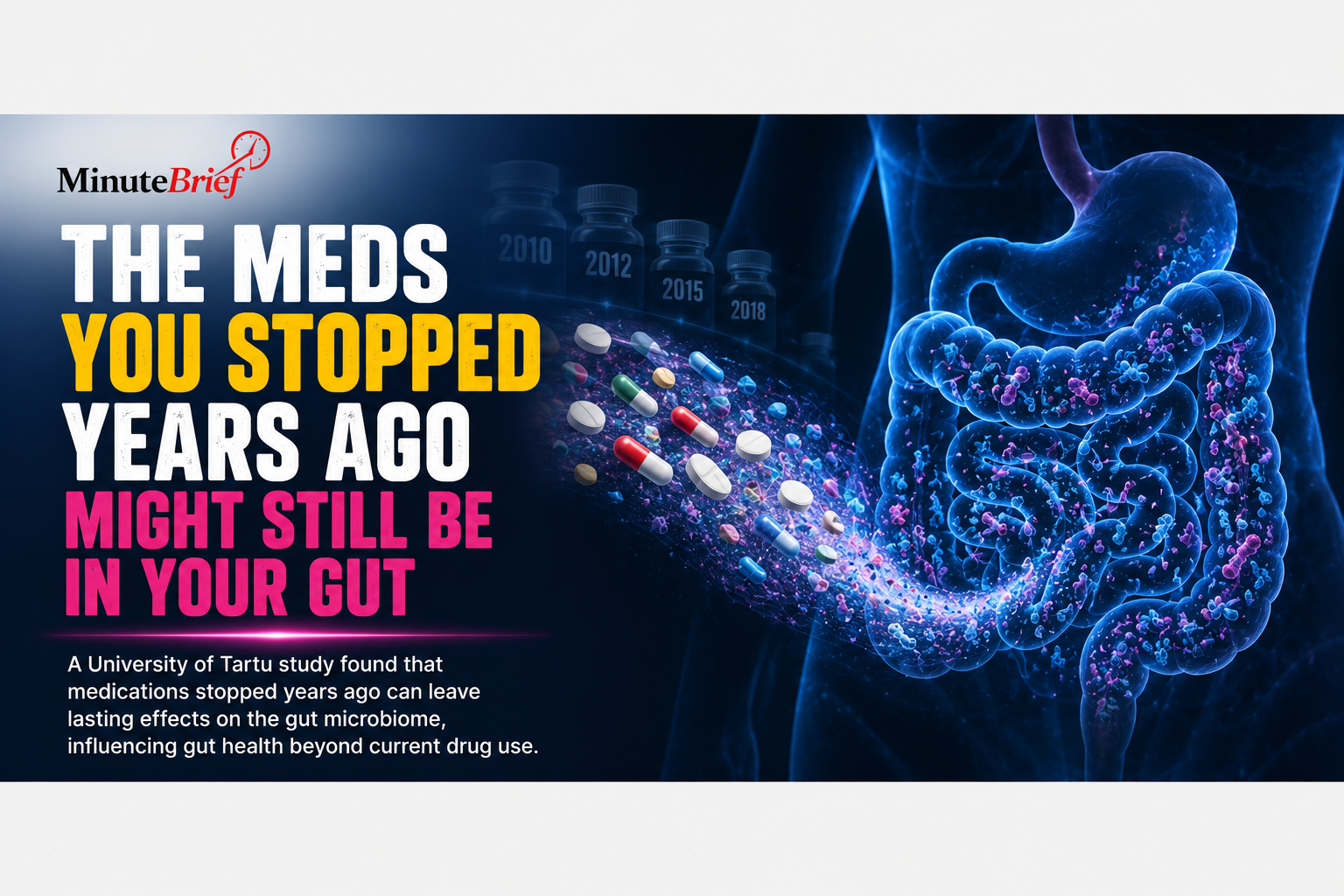
Medications you stopped taking years ago might still leave a lasting mark on your body. A major study led by researchers at the University of Tartu Institute of Genomics reveals that prescription history can reshape your gut microbiome long after the final dose.
- Beyond Current Use: Most microbiome studies only focus on current prescriptions, but past drug use turns out to be a surprisingly strong factor in explaining differences in gut health.
- Not Just Antibiotics: While antibiotics are known to disrupt gut bacteria, lasting microbial "fingerprints" were also linked to antidepressants, beta-blockers, acid-reducing drugs, and benzodiazepines.
- Surprising Anxiety Drug Impact: Benzodiazepines (like diazepam and alprazolam) showed long-term impacts on gut bacteria comparable to broad-spectrum antibiotics.
- Drug Differences: Medications within the same drug class didn't affect the microbiome in the same way, suggesting future research must evaluate specific drugs rather than broad categories.
Why It Matters
By tracking participants over time, researchers confirmed that starting or stopping medications causes predictable microbial shifts. Factoring in a patient’s full prescription history—rather than just current prescriptions—could help doctors distinguish between microbiome changes caused by active disease versus those left behind by past treatments.
Source: Science Daily