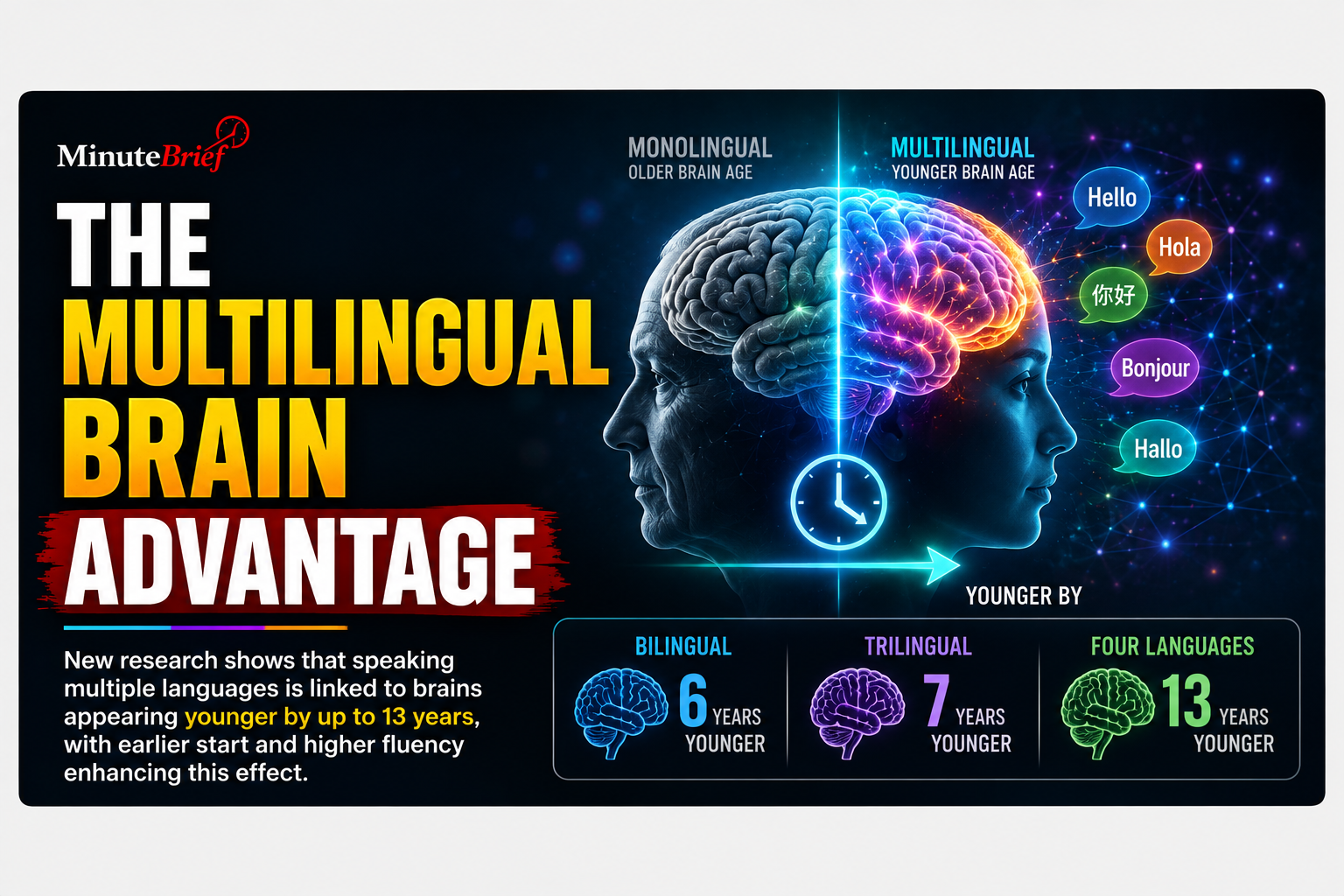
Speaking multiple languages could help keep your brain significantly younger, according to new research presented at the Federation of European Neuroscience Societies (FENS) Forum.
The Key Findings
- Younger Brain Age: Compared to monolinguals, bilingual individuals had brains that appeared 6 years younger. Trilinguals showed a 7-year difference, while those fluent in four languages showed a massive 13-year reduction in estimated brain age.
- Depth & Duration Matter: The benefit isn't just about being bilingual—starting earlier and achieving higher fluency were strongly linked to stronger anti-aging effects on brain connectivity.
The Early Caveats & Potential Factors
- Confounding Variables: While researchers adjusted for age, sex, and education, they noted that other unmeasured lifestyle factors—such as higher social engagement or active lifestyles—may also contribute to the younger brain ages observed.
- Unproven Clinical Impact: Researchers do not yet know if these younger-looking brain networks directly protect against neurodegenerative conditions like Alzheimer's, though future studies plan to investigate this link.
- Language Distance Questions: Scientists hypothesize that switching between closely related languages (like Spanish and French) might demand more brain control and produce a stronger effect, but this remains to be tested.
Source: Science Daily