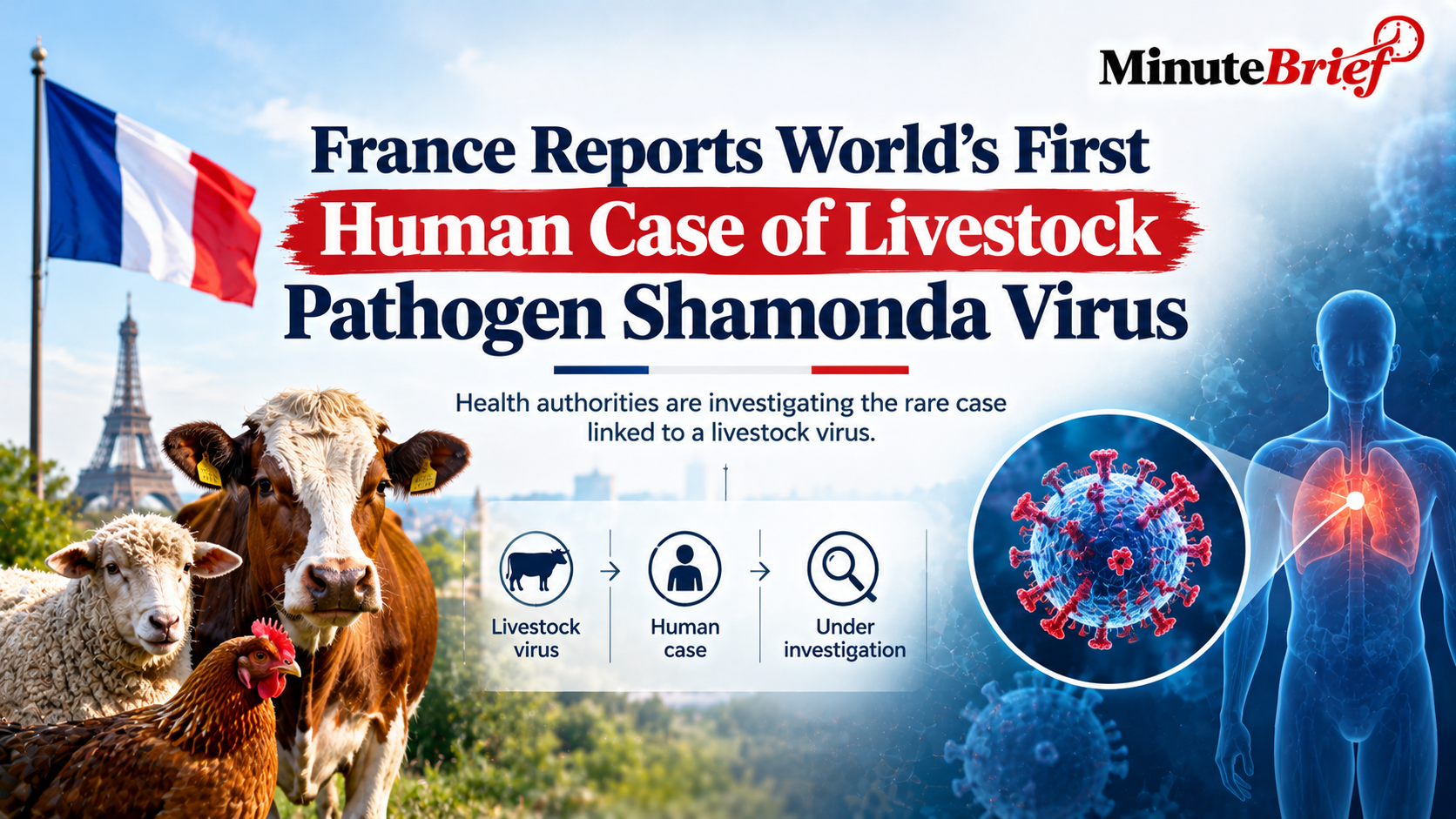
In Brief
- First Human Case: This marks the first documented instance of the livestock-borne Shamonda virus infecting a human.
- Transmission Vector: Typically found in cattle, sheep, and other livestock, the virus is spread primarily through bites from infected midges.
- Ongoing Monitoring: The European Centre for Disease Prevention and Control (ECDC) and the World Health Organization (WHO) are closely monitoring the situation as an isolated case.
Unprecedented Zoonotic Case Detected
France has confirmed the world's first known human infection involving the Shamonda virus. The patient, a severely immunocompromised individual receiving treatment for a serious underlying illness, died in early October. Preliminary findings from French health and agriculture ministries indicate that the neurological complications the patient developed prior to death were very likely linked to the virus.
While the pathogen has been recognized in livestock since the 1960s—and recently reached parts of Europe through midge activity—transmission to humans has historically been considered non-existent. Investigators suspect the patient may have contracted the virus via an insect bite while in eastern France.
Public Health Outlook
Global health organizations, including the WHO and the ECDC, have classified the event as an isolated case and are actively investigating the broader implications. French authorities have emphasized that, currently, there is no evidence of sustained human-to-human transmission, and no immediate threat or risk has been identified for the general population.