In Brief
- Massive Five-Year Decline: Nearly 20% of all remaining glacier ice in Switzerland has melted away between 2022 and 2026 alone.
- Second-Worst Year on Record: The 5.5% loss in 2026 trails only the catastrophic 2022 melt season (5.9%), as iconic ice fields like Aletsch and Rhône set individual loss records.
- Extinction of Smaller Glaciers: Around 30 smaller glaciers disappeared entirely during the year, including Glarus’s Plattalva Glacier.
Dramatic Ice Loss Across the Swiss Alps
Glacier Monitoring in Switzerland (GLAMOS) and the Swiss Academy of Sciences reported on October 1, 2026, that Swiss glaciers lost 5.5% of their remaining ice volume over the past 12 months.
The drastic retreat marks the second-largest annual melt recorded since observations began, surpassed only by the record 5.9% drop seen in 2022. Over a brief five-year span (2022–2026), Switzerland has lost almost one-fifth of its overall ice volume.
A Double Impact: Snow Drought and Extreme Heat
Glaciologists attribute the rapid thaw to a severe compounding effect: a winter with minimal snow cover followed by unusually warm summer conditions.
Winter 2025/26 ranked among the ten least snowy winters on record, leaving the high-altitude ice exposed without a protective layer of fresh snow. Subsequent heatwaves from May through September pushed freezing levels above 4,000 meters for 76 days—more than double the historical average.
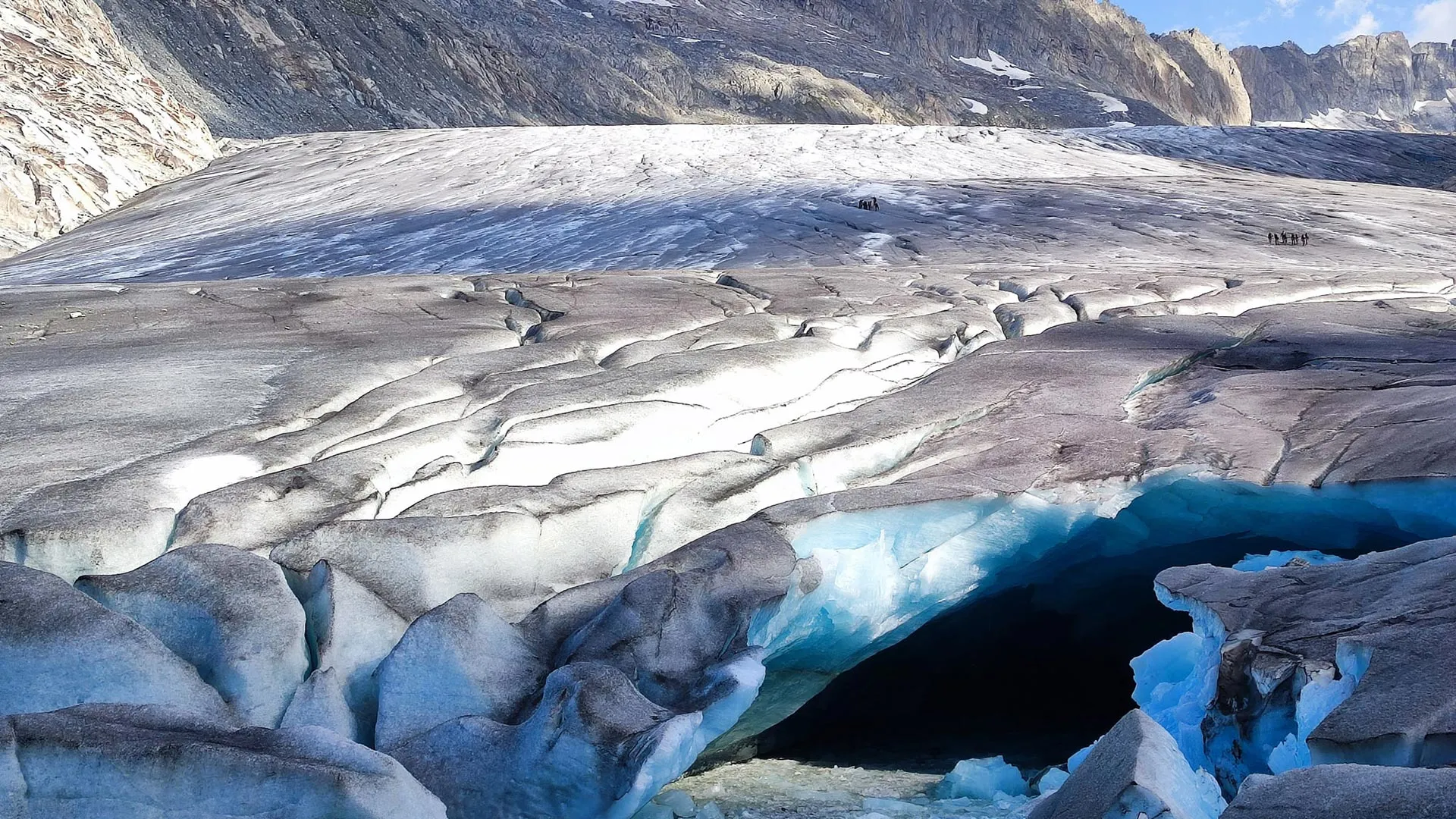
Major ice formations, including the famous Aletsch and Rhône glaciers, registered their highest single-season melt rates, losing up to 10 meters of thickness along their lower tongues.
"The warming we are experiencing can be attributed 100% to human-induced climate change," said Matthias Huss, head of the GLAMOS monitoring network. "Without human emissions, this level of rapid warming would not be occurring."
Environmental & Regional Implications
The ongoing loss of glacial mass threatens long-term water storage across central Europe. Glaciers act as natural reservoirs, feeding rivers during hot summer months to supply drinking water, agricultural irrigation, and hydroelectric power generation.
As smaller ice masses vanish entirely, regional authorities warn of increased risks, including rockfalls, land instability, and reduced river flow during peak dry periods.