Researchers at Stanford Medicine have uncovered a potential breakthrough in treating osteoarthritis: a targeted approach that rejuvenates existing cartilage cells, regrows lost knee joint tissue, and could eventually eliminate the need for joint replacement surgeries.
The Root Cause: An Aging "Gerozyme"
Currently, osteoarthritis treatments focus on managing pain. Once cartilage wears down, surgical replacement is often the only remaining option.
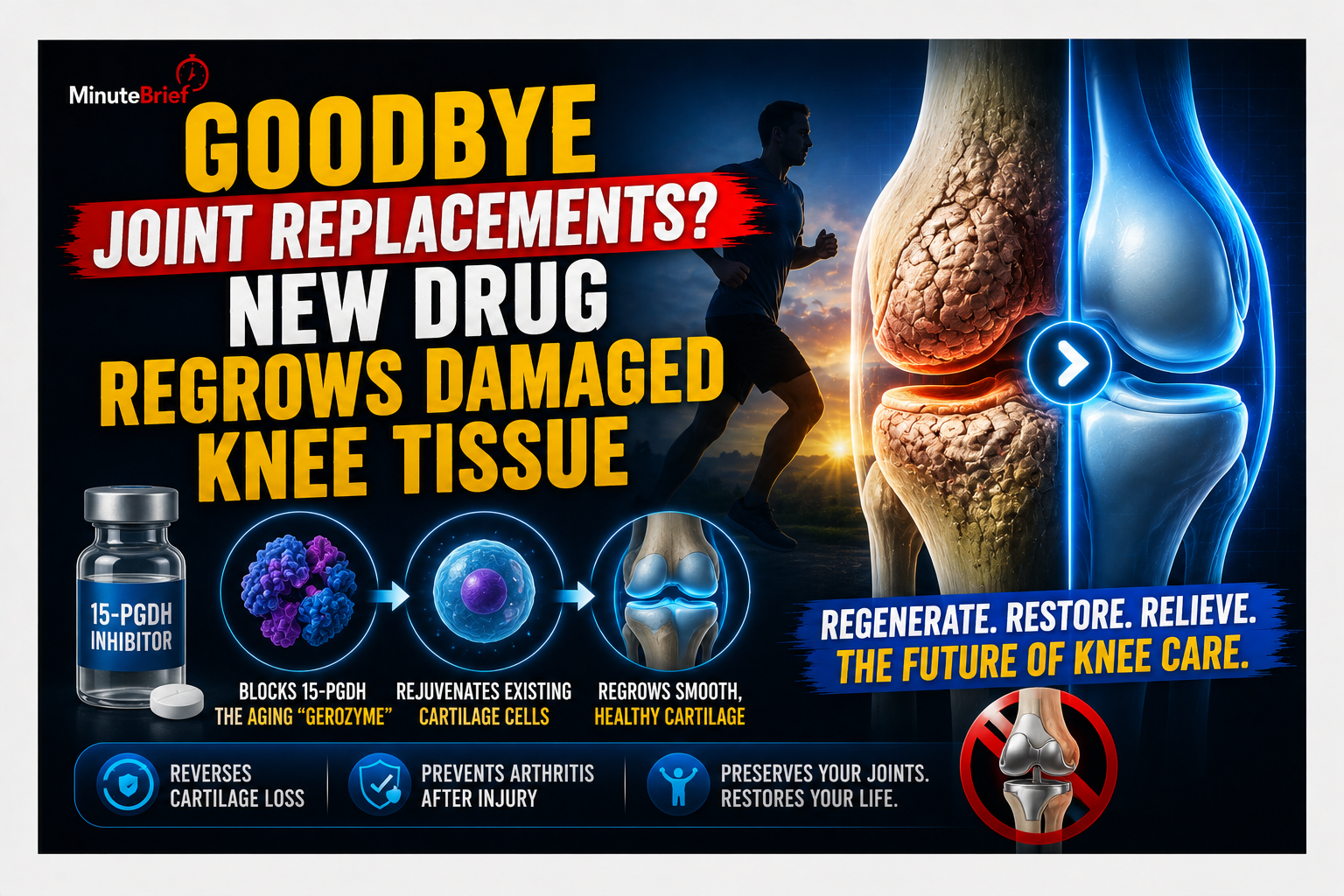
The Stanford team focused on 15-PGDH, a protein known as a gerozyme—an enzyme whose levels increase naturally with age, leading to progressive tissue degradation.
- Doubled Levels in Old Age: Researchers found that 15-PGDH levels roughly doubled in older mice, contributing directly to cartilage loss.
- Cell Reprogramming: Instead of relying on stem cells, blocking 15-PGDH caused existing cartilage cells (chondrocytes) to shift back into a more youthful biological state, producing smooth, slippery hyaline cartilage rather than less-effective fibrocartilage.
Key Results in Lab and Human Testing
- Reversing Natural Cartilage Loss: Older mice treated with a 15-PGDH inhibitor grew thicker, functional knee cartilage.
- Preventing Injury-Induced Arthritis: In mice with simulated ACL injuries, twice-weekly treatments for four weeks dramatically reduced the onset of osteoarthritis compared to untreated controls.
- Promising Human Results: Human cartilage samples harvested during total knee replacement surgeries began actively regenerating smooth joint cartilage within one week of exposure to the inhibitor.
What’s Next?
While these results offer compelling early evidence, clinical trials will be needed to confirm whether the treatment is safe and effective in humans. Because an oral 15-PGDH inhibitor has already completed Phase 1 safety trials for muscle weakness in healthy volunteers, researchers hope to launch clinical trials specifically testing joint cartilage regeneration soon.
If proven successful, the treatment could be delivered via an oral medication or targeted injection, providing a direct cure for joint deterioration rather than simple symptom management.