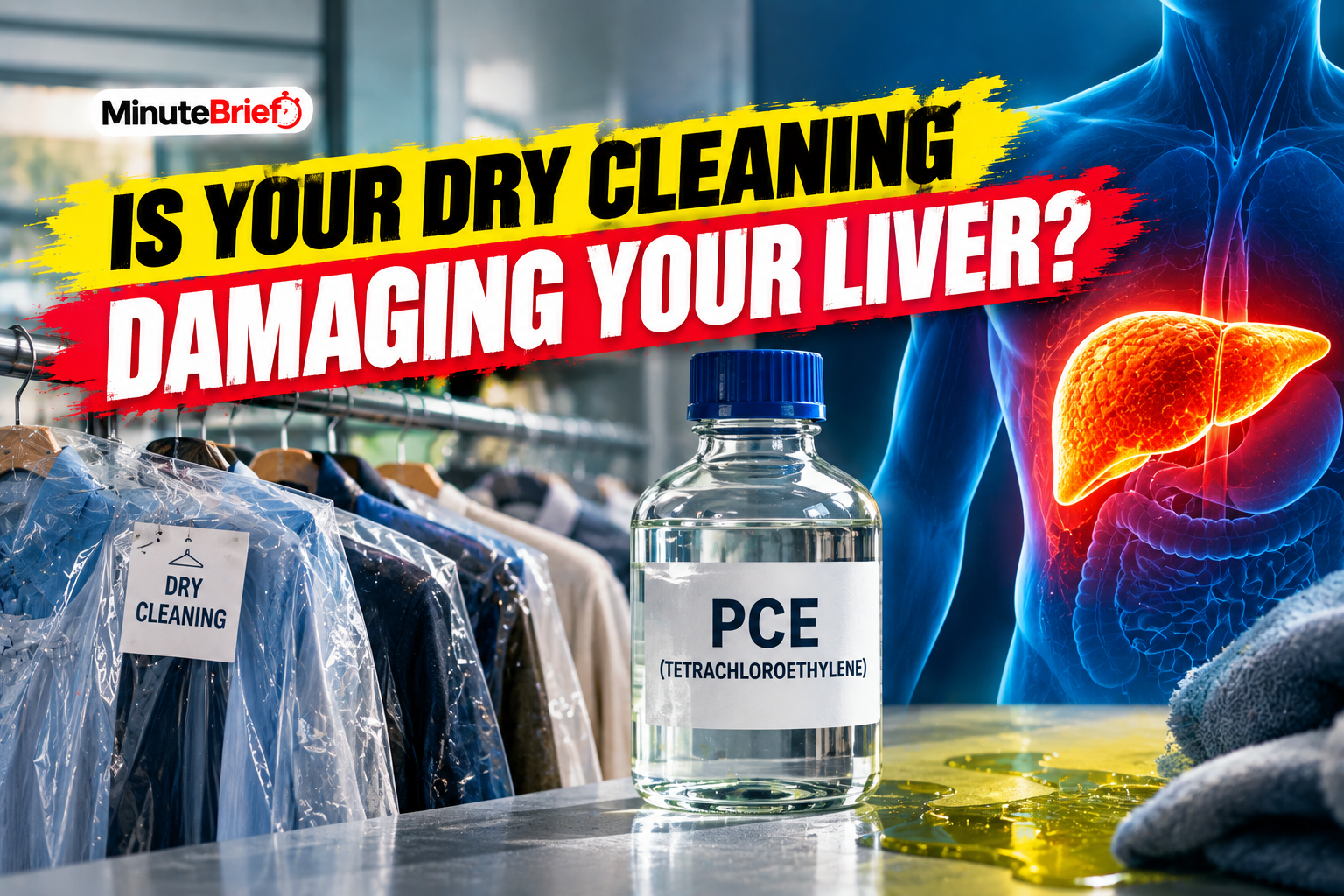
A common chemical found in dry cleaning and everyday household products may be an overlooked threat to liver health.
A new study from Keck Medicine of USC, published in Liver International, shows that exposure to tetrachloroethylene (PCE) is tied to a significantly higher risk of serious liver damage—even in people without typical risk factors like heavy drinking, obesity, or hepatitis.
Key Findings
- Triple the Risk: Adults with detectable PCE in their blood were three times more likely to have significant liver fibrosis (scar tissue buildup) than those without exposure.
- Sharper Odds at Higher Exposures: Every 1 ng/mL increase in blood PCE concentration increased the odds of liver fibrosis five-fold.
- Acts Independently: The link held true after controlling for age, sex, race, education, alcohol use, and metabolic issues like diabetes or high cholesterol.
- Who Is Exposed: Higher-income individuals showed higher exposure levels, likely from using dry-cleaning services more often. However, dry-cleaning workers face the highest risk due to direct daily contact.
What Is PCE and How Does Exposure Happen?
PCE is a colorless, grease-dissolving synthetic liquid used in dry cleaning, spot removers, arts and crafts adhesives, and metal polishes. Exposure mainly occurs through:
- Inhalation: Fumes gradually released into the air from dry-cleaned clothes.
- Water: Groundwater contaminated by industrial spills or improper chemical disposal.
Why It Matters
Unchecked liver fibrosis can lead to liver failure or liver cancer. While the U.S. EPA has begun a 10-year phaseout of PCE in dry cleaning, researchers hope these findings prompt earlier screenings for liver damage in people exposed to industrial solvents—helping doctors intervene before scarring becomes permanent.