In Brief
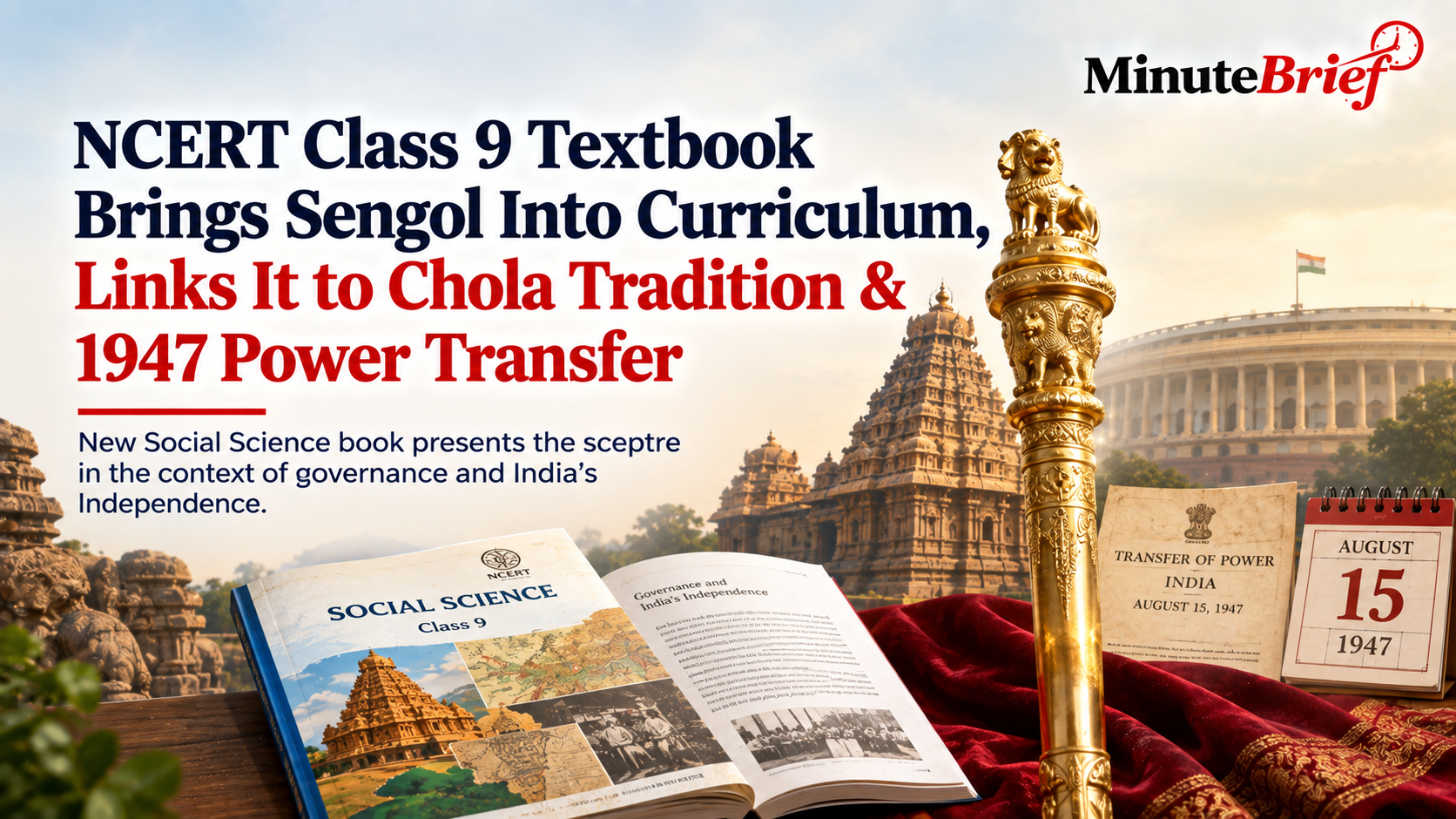
- NCERT incorporated the Sengol into the new Class 9 Social Science textbook Understanding Society: India and Beyond – Part 2.
- The textbook describes the sceptre installed by Prime Minister Narendra Modi in the new Parliament building in 2023 as a symbol of good governance rooted in ancient Tamil tradition.
- The curriculum states that the Sengol was presented to Prime Minister Jawaharlal Nehru on August 15, 1947, by Adheenam saints to mark India's Independence.
The National Council of Educational Research and Training (NCERT) has incorporated the 'Sengol' into its newly published Class 9 Social Science textbook titled Understanding Society: India and Beyond – Part 2. Released as part of the broader curriculum revision under the National Education Policy (NEP) 2020, the textbook details the history and symbolism of the ceremonial sceptre installed by Prime Minister Narendra Modi in the Lok Sabha chamber during the inauguration of the new Parliament building in May 2023.
According to the updated curriculum, the tradition of using the Sengol as a symbol of righteous governance originated more than a thousand years ago during the Chola dynasty in Tamil Nadu. The textbook states that at the stroke of midnight on August 15, 1947, India's first Prime Minister, Jawaharlal Nehru, received the Sengol from saints of the Thiruvavaduthurai Adheenam to signify the transfer of power and national independence. While academic experts and historians hold differing views regarding the historical documentation of the 1947 ceremony, the inclusion forms part of NCERT's effort to integrate indigenous cultural heritage and historical governance frameworks into national school curricula.