October is shaping up to be an action-packed month for skywatchers. From Saturn shining at its brightest to a classic meteor shower and a stunning lunar alignment, there are plenty of reasons to step outside and look up after dark.
Here are the top celestial events to add to your calendar this month:
Key Skywatching Highlights
- Oct. 4 — Saturn Reaches Opposition: Saturn will be at its closest and brightest point relative to Earth, remaining visible for most of the night.
- Oct. 6 — Jupiter and the Moon Pair Up: Early risers can catch a thin crescent Moon glowing right next to bright Jupiter before sunrise.
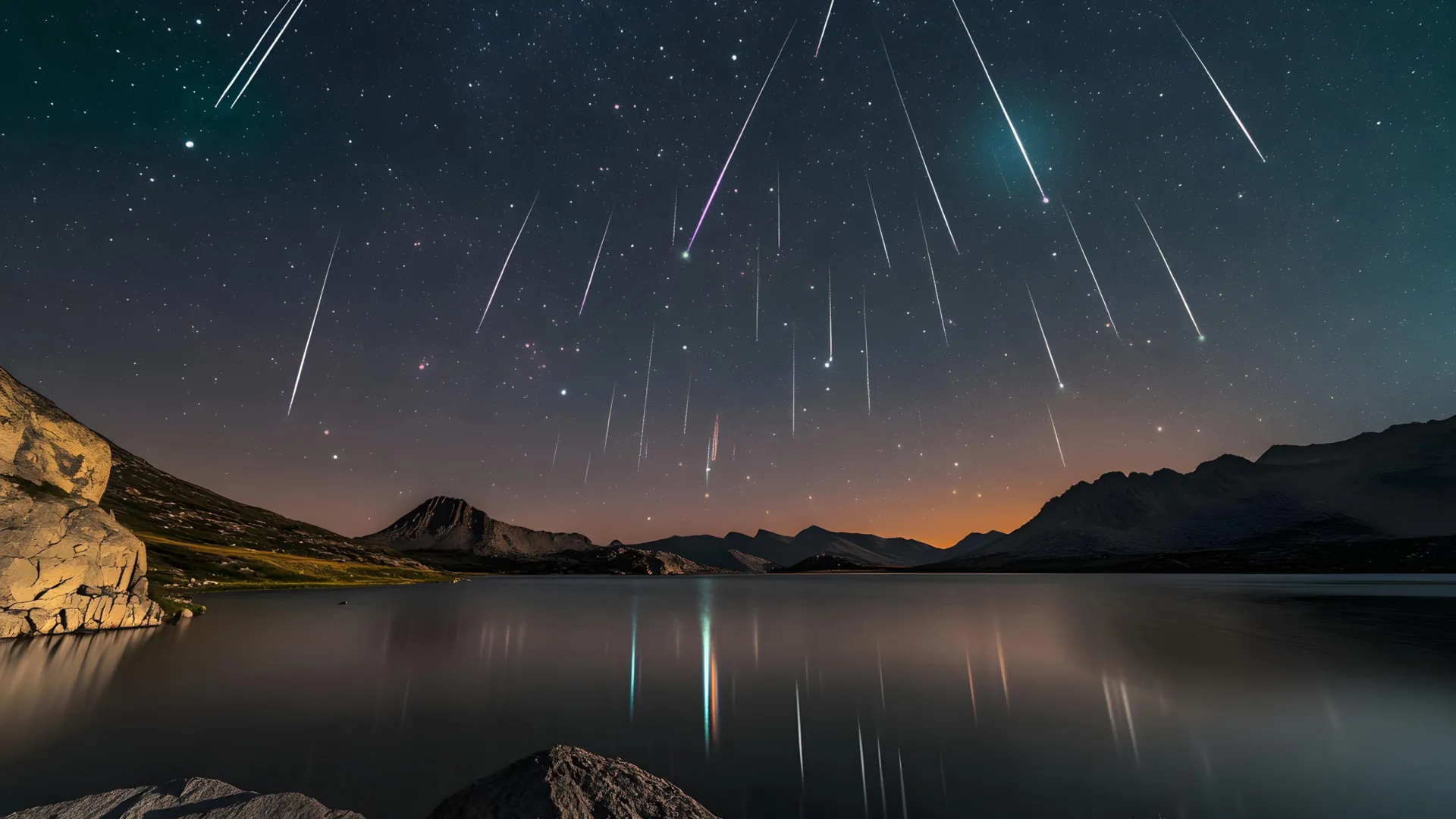
- Oct. 21–22 — The Orionid Meteor Shower Peaks: Debris from Halley’s Comet will streak through the atmosphere. The best viewing hours will be right before dawn.
- Oct. 27–28 — The Moon Meets the Seven Sisters: The Moon passes right by the famous Pleiades star cluster in the eastern sky.
Saturn at Its Best
On October 4, Saturn hits opposition—meaning Earth sits directly between Saturn and the Sun. Because it sits opposite the Sun from our perspective, Saturn rises around sunset and stays illuminated all night long, making it one of the year’s best viewing opportunities.
Adding to the excitement, scientists are keeping a close eye on Saturn’s unusual atmospheric activity. NASA’s Hubble Space Telescope recently spotted a growing ten-sided wave around Saturn’s south pole, giving researchers a rare look at a massive planetary storm system as it forms.
Catching the Orionid Meteor Shower
Mid-month brings the peak of the Orionid meteor shower, which occurs as Earth passes through the trail of dust left behind by Halley’s Comet.
While the meteors appear to radiate from the constellation Orion, they can flash across any part of the night sky. Bright moonlight from a waxing gibbous Moon may hide some of the fainter shooting stars, so your best chance to spot them is during the dark hours just before dawn after the Moon sets. For the best view, head away from city lights and give your eyes a few minutes to adapt to the dark.
A Rendezvous with the Seven Sisters
To wrap up the month, watch the eastern horizon on the night of October 27 into October 28. The Moon will pass close to the Pleiades (also known as the Seven Sisters), an open star cluster that looks like a small, hazy group of six or seven stars to the naked eye. While no equipment is needed to enjoy the pairing, a simple pair of binoculars will bring out the cluster's sparkling detail.