In Brief
- Protesters demanded assistance for the poor regardless of caste at Delhi's Jantar Mantar.
- They argued financial status should govern eligibility for educational and other aid.
- Five key demands were presented to remove caste-based reservations.
- The movement seeks to focus government help solely on economic disadvantage.
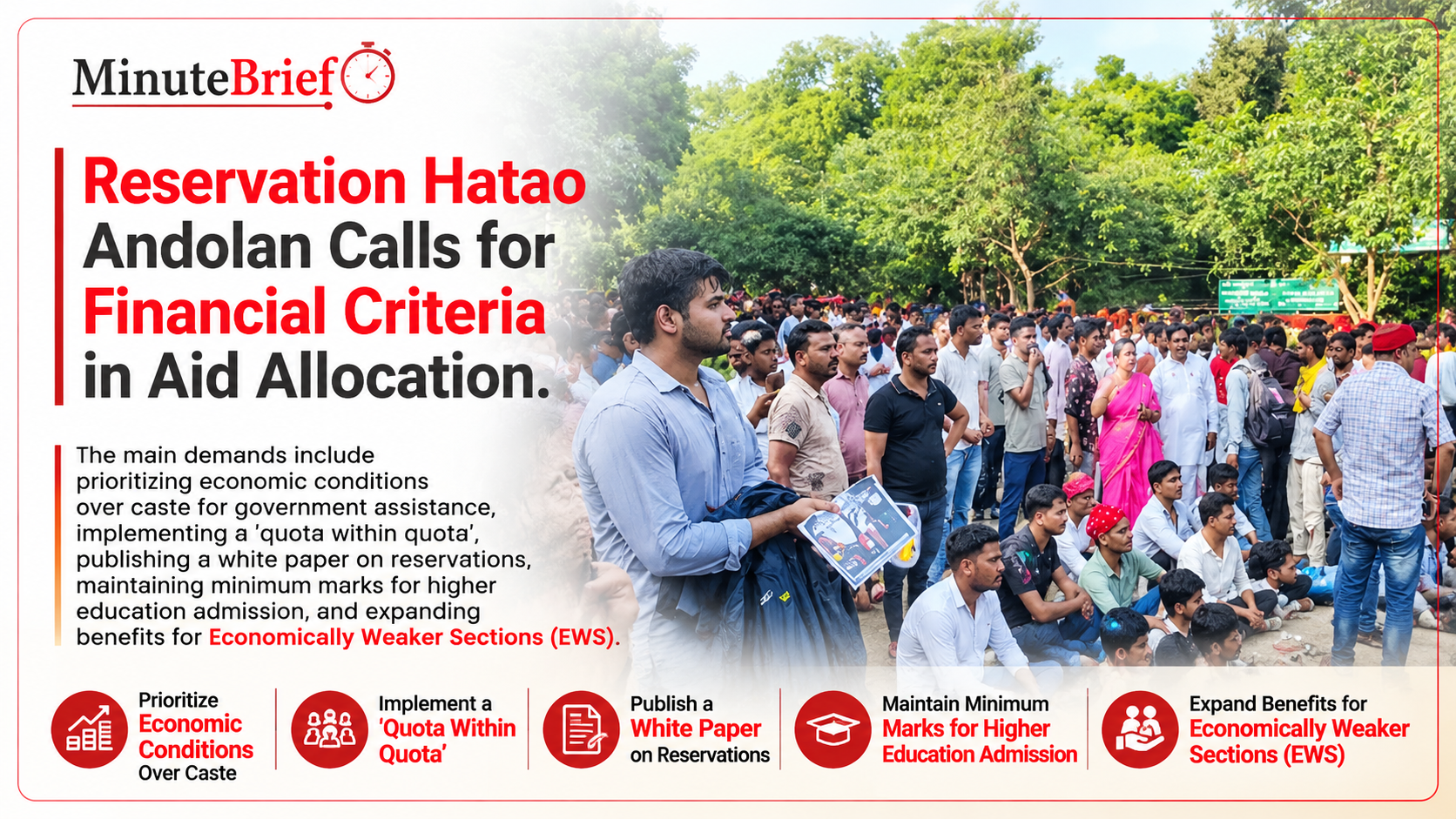
Protests at Jantar Mantar, Delhi, under the Reservation Hatao Andolan banner, called for government assistance to be allotted based on poverty rather than caste. Demonstrators emphasized the need to review the criteria for availing educational and social benefits, urging policymakers to consider individuals' financial circumstances first.
The protest included five demands, which highlighted the removal of caste-based reservation systems, asserting that economic status is a more just and relevant measure in today's context. Advocates argued that the present system often overlooks the poor within so-called privileged groups.
The main demands include prioritizing economic conditions over caste for government assistance, implementing a 'quota within quota', publishing a white paper on reservations, maintaining minimum marks for higher education admission, and expanding benefits for Economically Weaker Sections (EWS).
Organizers hope this approach will lead to equitable access to opportunities for all economically disadvantaged citizens, regardless of caste identity. They call on the government to revise existing policies and create a framework aimed at assisting the poor comprehensively.
These demands have sparked discussion nationwide about the balance between social justice and economic criteria in government welfare programs.