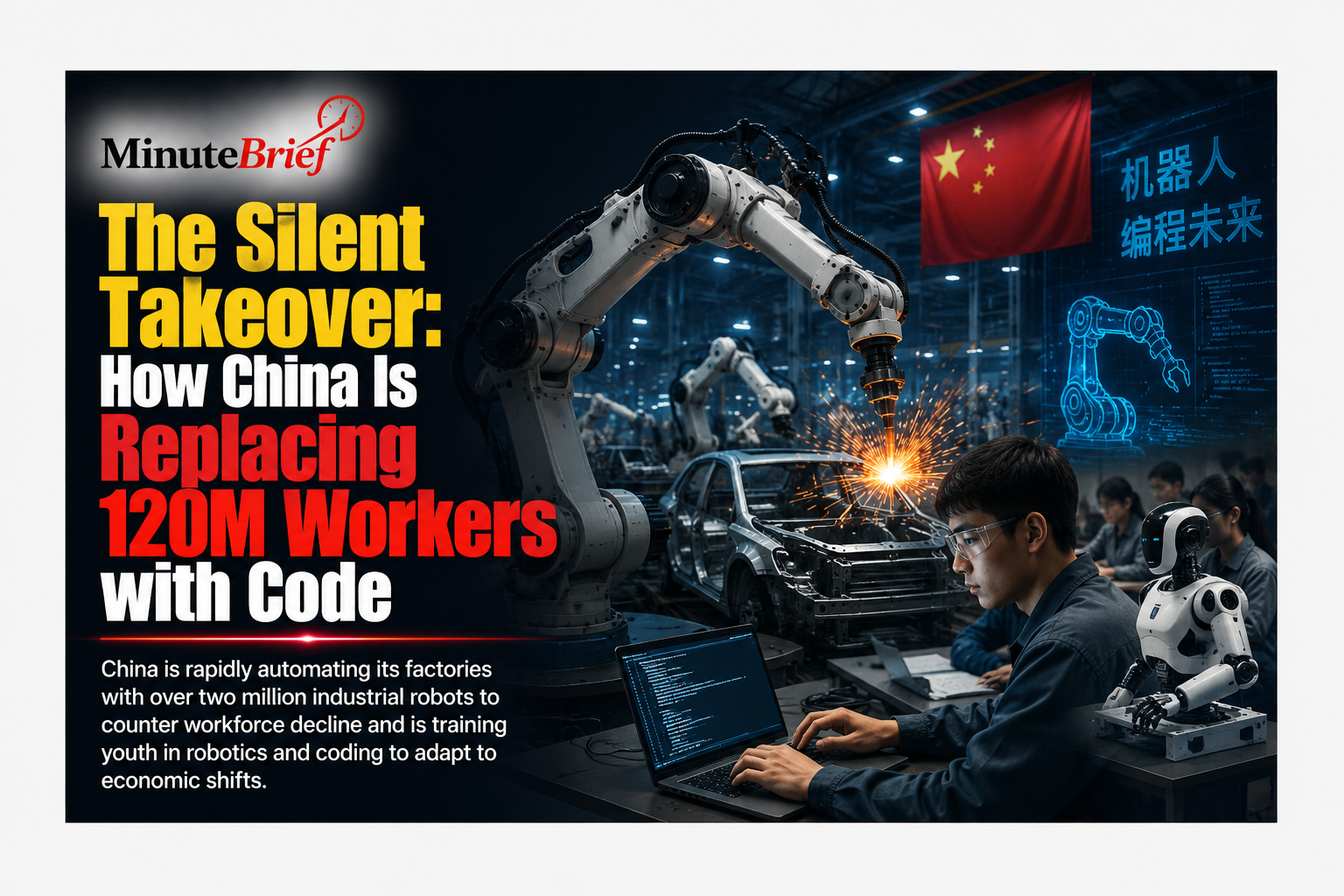
Behind the flashy displays of boxing and sprinting humanoid robots, a far more significant transformation is unfolding across China’s factories and vocational classrooms: a massive drive toward total industrial automation.
Key Drivers
- Demographic Decline: An aging population and shrinking workforce—with over a third expected to be over 60 by 2035—are forcing factories to replace human labor.
- Massive Scale: Backed by a $20 billion state innovation plan, China already operates over two million industrial robots and manufactures more than half of the global supply.
- Speed Advantage: Ecosystems like Shenzhen allow engineers to source components within an hour, outpacing Western rivals.
The Factory Floor & Classroom
- Near-Total Automation: Plants like EV maker Leapmotor have achieved nearly 100% automation in core processes like stamping, painting, and welding.
- Self-Building Machines: Firms like CRP Technology are programming robotic arms with the ultimate goal of creating autonomous systems that build other robots.
- Training the Workforce: Institutions like the Hangzhou Technician Institute teach teenagers coding and robotics to ensure young graduates stay relevant as structural economic shifts accelerate.
Major Risks
- Worker Displacement: Transitioning too quickly threatens the livelihoods of 120 million manufacturing workers.
- The AI Gap: While China dominates hardware, US based competitors still lead in developing complex AI models.
- Economic Strains: Rapid automation occurs alongside real estate struggles, heavy local government debt, and sluggish consumer spending.
Source: BBC