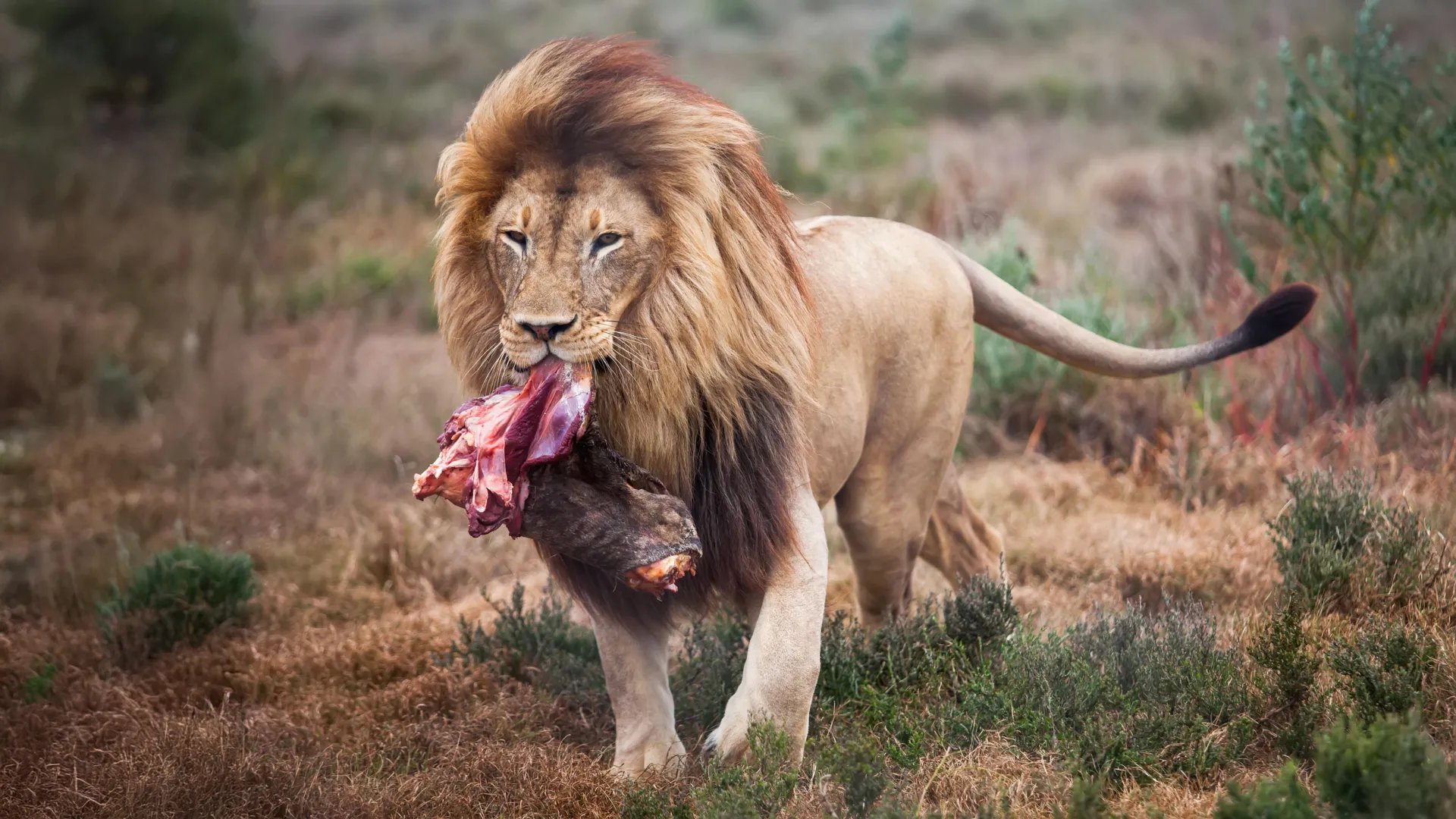
A new study from Adelaide University and Monarto Safari Park in South Australia reveals that zoo-housed lions behave much more like their wild counterparts when fed whole animal carcasses on a natural "feast-and-fast" schedule.
The research, published in Applied Animal Behaviour Science, demonstrates how adjusting feeding routines can significantly impact the behavioral health and well-being of large carnivores in captivity.
Key Takeaways
- Simulating Wild Cycles: In nature, lions don't eat at the same time every day—they experience intense periods of feasting followed by fasting depending on hunting success.
- Three Times the Feeding Time: When offered whole carcasses, the lions spent nearly three times longer eating, engaging in key natural behaviors like tearing, pulling, and manipulating their food.
- A Rest-and-Digest Rhythm: Following a heavy meal, the lions spent extended periods resting. As time passed during the fasting phase, their movement gradually increased, perfectly mimicking the activity patterns seen in wild lion pride dynamics.
- Pacing Isn't Driven by Hunger: Researchers monitored repetitive pacing and found it was tied to predictable daily events—such as keeper arrivals or habitat transfers—rather than hunger or the longer gaps between meals.
How the Study Was Conducted
- Continuous 24/7 Monitoring: Scientists tracked three adult male African lions using eight infrared cameras over three months, creating one of the most detailed 24-hour datasets on captive lion behavior to date.
- Whole Carcass Routine: Animal care staff introduced approximately 200 kilograms of whole carcasses to the lions' schedule every nine days.
- Behavioral Safety: The team reported no rise in aggression or social disruption among the males during carcass feeding sessions, confirming the safety and feasibility of the routine.
Why It Matters
Traditional zoo evaluations often focus only on how animals react immediately after food is presented. This study highlights the importance of observing behavior across multi-day cycles, showing that natural feeding schedules can enhance physical engagement and psychological well-being for days after a meal.