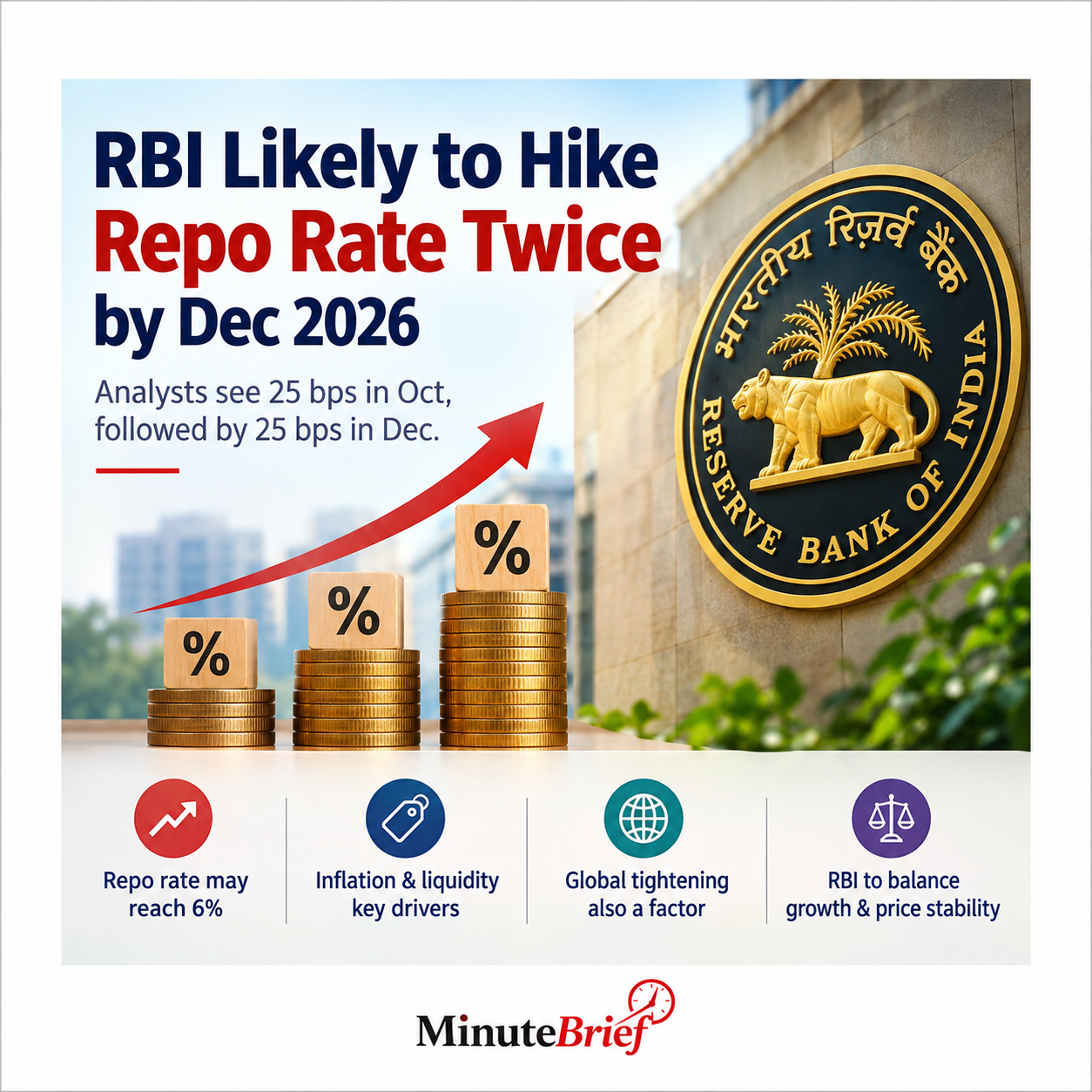
Analysts expect the Reserve Bank of India (RBI) to deliver two repo-rate hikes by the end of calendar year 2026, potentially signaling a shift toward tighter monetary conditions in the year's second half. Market participants anticipate the Monetary Policy Committee (MPC) will raise the repo rate by 25 basis points in October 2026, followed by another 25-basis-point increase in December.
If both hikes occur, the benchmark repo rate would reach 6%. This expected tightening is driven by concerns over inflation risks, strong liquidity conditions in the banking system, and the possibility of a broader global monetary tightening cycle.
Excess liquidity can soften financial conditions and add to inflationary pressures, while policy tightening by global central banks may also influence India’s monetary policy environment. The RBI faces the challenge of balancing economic growth with price stability, ensuring liquidity conditions align with its inflation objectives.
A cumulative 50-basis-point increase would represent a 0.50 percentage-point rise in the benchmark rate. Higher repo rates could increase borrowing costs for loans linked to external benchmarks and potentially improve returns on new deposits. Businesses may also face higher financing costs as banks pass on policy-rate changes to lending rates.
The upcoming October and December MPC decisions will be closely watched by financial markets, borrowers, businesses, and investors for insights into the RBI’s approach to managing inflation, liquidity, and overall financial conditions in late 2026.