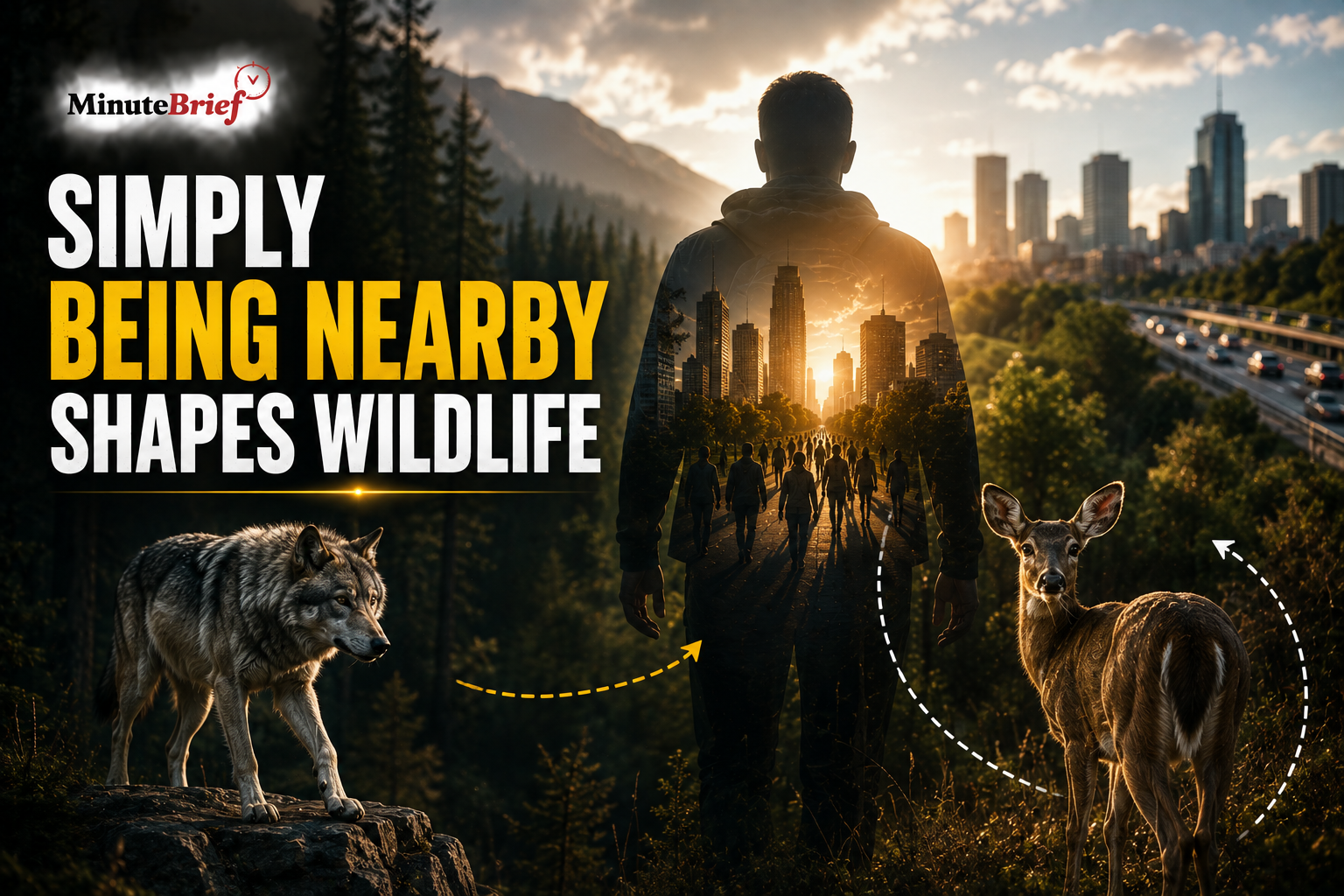
Simply Being Nearby Shapes Wildlife For centuries, humans have altered natural landscapes with cities, farms, and highways, forcing animals to adapt. But a major study published in Science reveals that wildlife isn't just reacting to human infrastructure—animals change where and how they live simply because people are physically nearby.
Led by researchers from UC Santa Barbara, the Smithsonian's National Zoo, and Yale University, the team paired weekly GPS tracking records from 4,581 mammals and birds (37 species) with anonymized cellphone location data across the U.S. during the pandemic's "anthropause."
Key Takeaways
- Widespread Impact: Physical human presence altered territory size or resource use for 67% of mammal species and 68% of bird species.
- Interconnected Factors: Overall, 57% of species were impacted by human presence working alongside physical land modification.
- Sensitivity in Wild Spaces: Animals proved especially sensitive to human presence in lightly developed areas like national parks compared to cities.
- Opposing Behaviors: Species reacted very differently—wolves expanded their ranges near people to spread out, while white-tailed deer shrank their ranges when foot traffic increased.
Because species react so uniquely, researchers stress that effective wildlife conservation cannot rely on generic land-use rules; it requires targeted strategies that give specific animals physical space from human activity.
Source: Science Daily