In Brief
- Most marine organisms depend on saltwater physiology and would face rapid collapse.
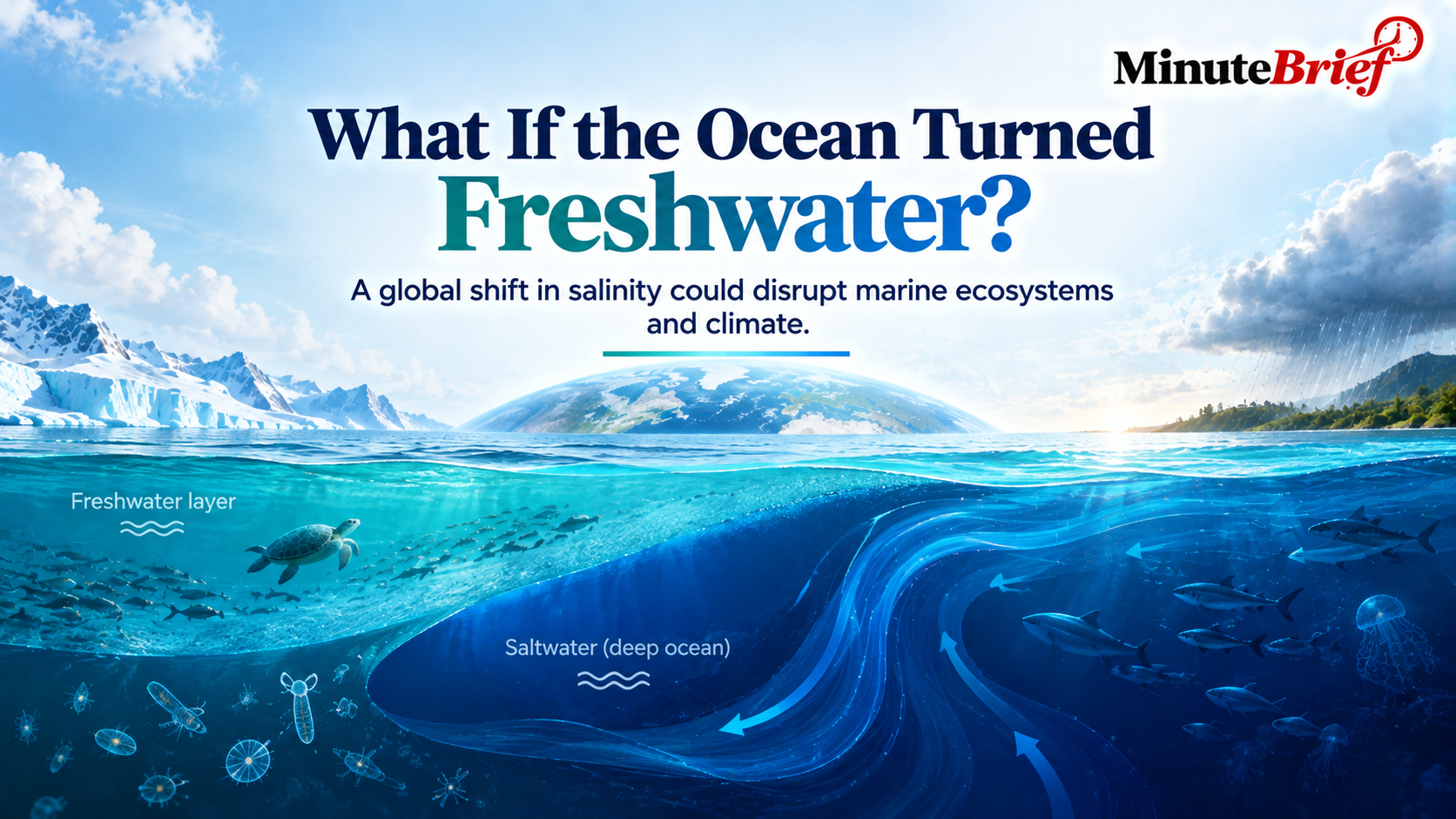
- The sudden loss of salinity would alter global ocean circulation, driving massive shifts in global temperatures, rainfall, winds, and storms.
- Declines in vital phytoplankton and algae would severely impair global oxygen production and carbon absorption.
Ecological Collapse in Marine Ecosystems
The transformation of global oceans from saltwater to freshwater would present an immediate and insurmountable physiological shock to marine life. Because saltwater organisms rely on specific salt concentrations to maintain internal fluid balance through osmosis, an abrupt change to freshwater would cause their cells to rupture or fail.This would lead to a near-total collapse of marine species, quickly dismantling marine food chains from microscopic organisms up to apex predators.
Disruption of Ocean Currents and Weather Systems
Ocean salinity plays a fundamental role in driving global thermohaline circulation—the "conveyor belt" of the oceans that distributes heat around the planet. Removing ocean salt entirely would halt these crucial currents.
Consequently, global temperatures, rainfall patterns, prevailing winds, and storm systems would experience severe, unpredictable disruptions. Regions heavily dependent on ocean heat transport could experience extreme climate shifts.
Atmospheric Consequences and Carbon Sinks
Marine phytoplankton and algae are responsible for a massive share of Earth's oxygen production and carbon dioxide absorption. A sudden shift to freshwater environments would cause a drastic decline in these populations.
The resulting loss of photosynthetic capacity would impair oxygen generation and reduce the oceans' ability to absorb atmospheric carbon, throwing Earth's broader climate system out of balance.
Next Steps and Context
While this scenario remains a theoretical thought experiment rather than an imminent physical possibility, examining it underscores the delicate chemical balance required to sustain marine biodiversity and stabilize global climate systems.