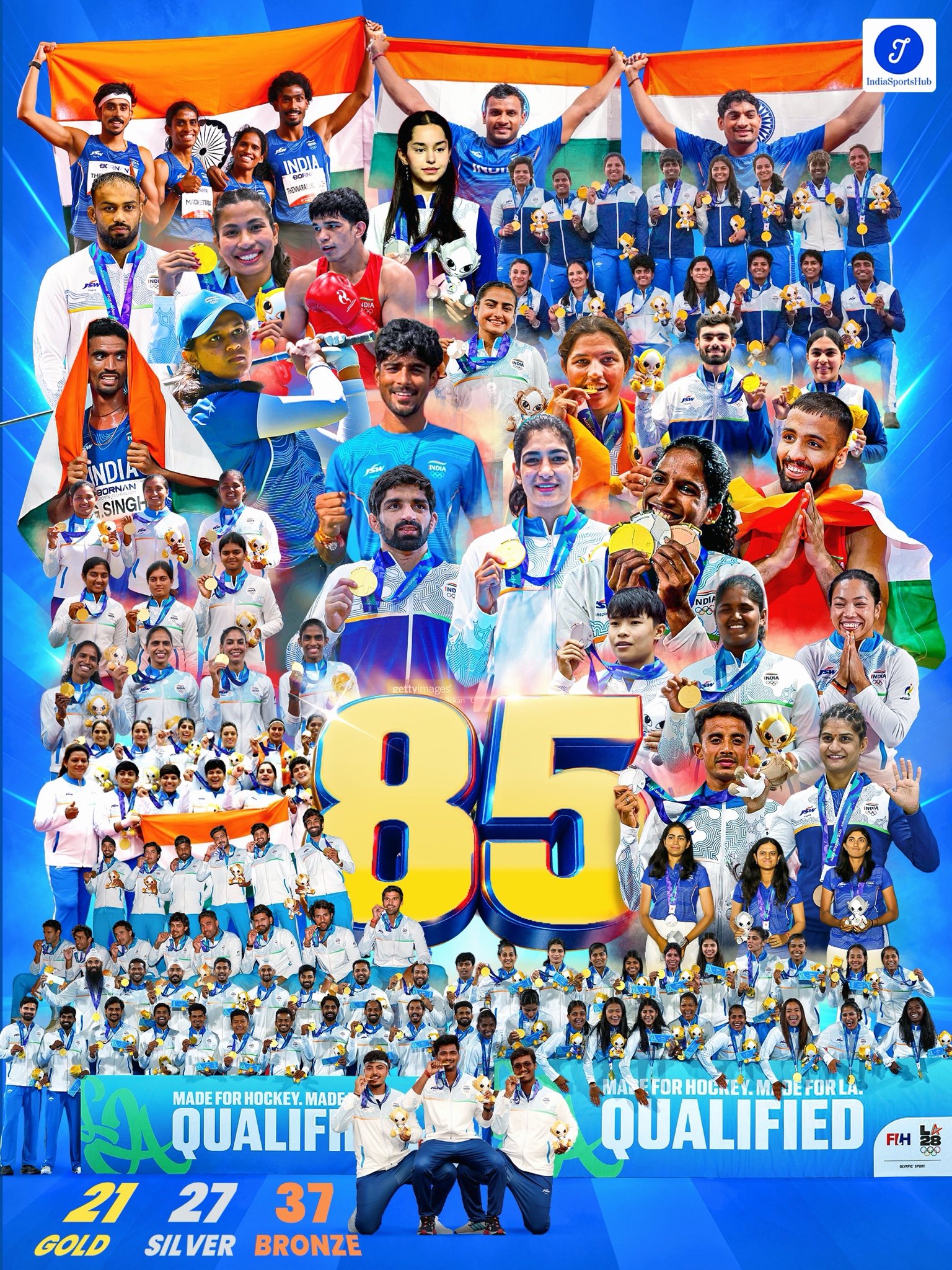
If you had told me a decade ago that I’d be sitting here watching India comfortably secure 4th place at the Asian Games with a whopping 85 medals—including 21 golds—I probably would have laughed. For the longest time, following Indian sports meant celebrating the occasional, isolated spark of brilliance. We relied on rare, heroic individuals to pull off a miracle on the global stage, while overall sports discourse was almost entirely consumed by cricket.
Now, looking at our performance at Aichi-Nagoya 2026, it feels like the entire script has been flipped. This wasn't just a lucky streak; it was a systematic, undeniable display of strength that signals a fundamental shift in how our nation approaches athletics.
Growing up, the narrative around non-cricket sports in India was always rooted in struggle and "what could have been." We talked endlessly about the lack of modern infrastructure, non-existent grassroots talent identification, and the brutal lack of financial security for anyone daring to pursue a career in sports. Athletes often had to buy their own gear, train without proper sports science, and navigate bureaucracy just to get a chance to represent the flag.
Back then, crossing double digits in total medals at a major event like the Asiads felt like a national triumph. We celebrated silver and bronze medals like gold because we knew how uphill the battle was for our athletes.
To go from that era to bringing home 85 medals—with dominant, confident performances across athletics, shooting, archery, boxing, golf, and team sports—is nothing short of a total cultural revolution. We aren't sending contingents to Japan or anywhere else just to participate or gain exposure anymore; we are sending elite teams trained, conditioned, and mentally prepared to win.
What This Means for Men: A Culture of Professional Excellence
For male athletes across India, this campaign proves that professionalism, structured private-public backing, and modern sports science yield real, repeatable results on the world stage. Look at how our team sports delivered, with both our cricket and field hockey squads successfully defending their continental titles under immense pressure. Or look at the relentless precision in shooting and boxing, where our competitors outclassed established rivals.
It completely changes the trajectory for young boys growing up today. Pursuing sports outside of cricket is no longer viewed as a reckless risk or a pipe dream that ends in financial uncertainty. It offers a viable, respected career path backed by academies, leagues, and government support like the TOPS (Target Olympic Podium Scheme). The underlying mindset among male competitors has evolved from "hoping to make the squad" to "expecting to step onto the top of the podium."
The Real Game-Changer: What This Means for Women
Where this campaign truly hits home for me, though, is the incredible, transformative impact on women’s sports.
Honestly, watching these games, I found myself getting genuinely emotional—especially watching boxing. Lovlina Borgohain is from my home state of Assam, and seeing her step into that ring and secure gold felt like a personal victory for all of us back home. When someone from your own soil, someone who walked the same ground and faced the very same regional hurdles, stands at the top of an international podium, it hits differently. It’s not just a medal hanging around her neck; it’s a beacon of hope for every girl in our state who has ever been told her dreams are too big for her circumstances.
And she wasn't alone. Seeing 17-year-old Kumkum Mohod grab gold in archery, Pranavi Urs pull off a stunning victory in golf, and Parveen Hooda dominate in boxing showed the depth of talent we now possess. For generations, young women in India didn't just fight opponents on the mat or the track; they fought deep-seated societal expectations, a lack of family support, and restricted access to basic training facilities. They had to justify why they were stepping out of the house in sportswear before they could even prove what they were capable of on the field.
Seeing our female athletes regularly outperform expectations on a massive international stage breaks down those cultural barriers faster than any policy or campaign ever could. They are showing families in every corner of the country that sport isn't a distraction for a young girl—it is a path to strength, independence, and national pride. They aren't just winning hardware to add to the tally; they are rewriting the social blueprint for millions of young girls in small towns and villages who are watching them on TV thinking, “If she can rise from our red dirt to rule Asia, why can't I?”
The Mark India Has Left on the World
This Asian Games campaign wasn't just a win for our national pride—it was a loud, deliberate statement to the rest of the world.
India is no longer a sleeping giant in sports; we are wide awake and making our presence felt. Finishing fourth behind traditional sporting heavyweights proves that our talent pipeline, high-performance training centers, and long-term planning are genuinely working. Global sporting federations are taking notice, foreign coaches are lining up to work with Indian talent, and international opponents no longer view India as an easy draw. They prepare for Indian athletes with a whole new level of tactical respect.
At the end of the day, this moment is about so much more than a two-week tournament in Japan. It’s about building a sustainable, self-reliant sporting ecosystem that will nurture talent for generations to come. The momentum from 2026 isn't the finish line—it’s the launchpad for upcoming Olympic cycles and a solid foundation as India aims to host major global sporting events in the coming decades.
We’ve officially moved past the era of simply showing up. We are here to compete, we are here to dominate, and we are here to stay.