India has a complicated relationship with women.
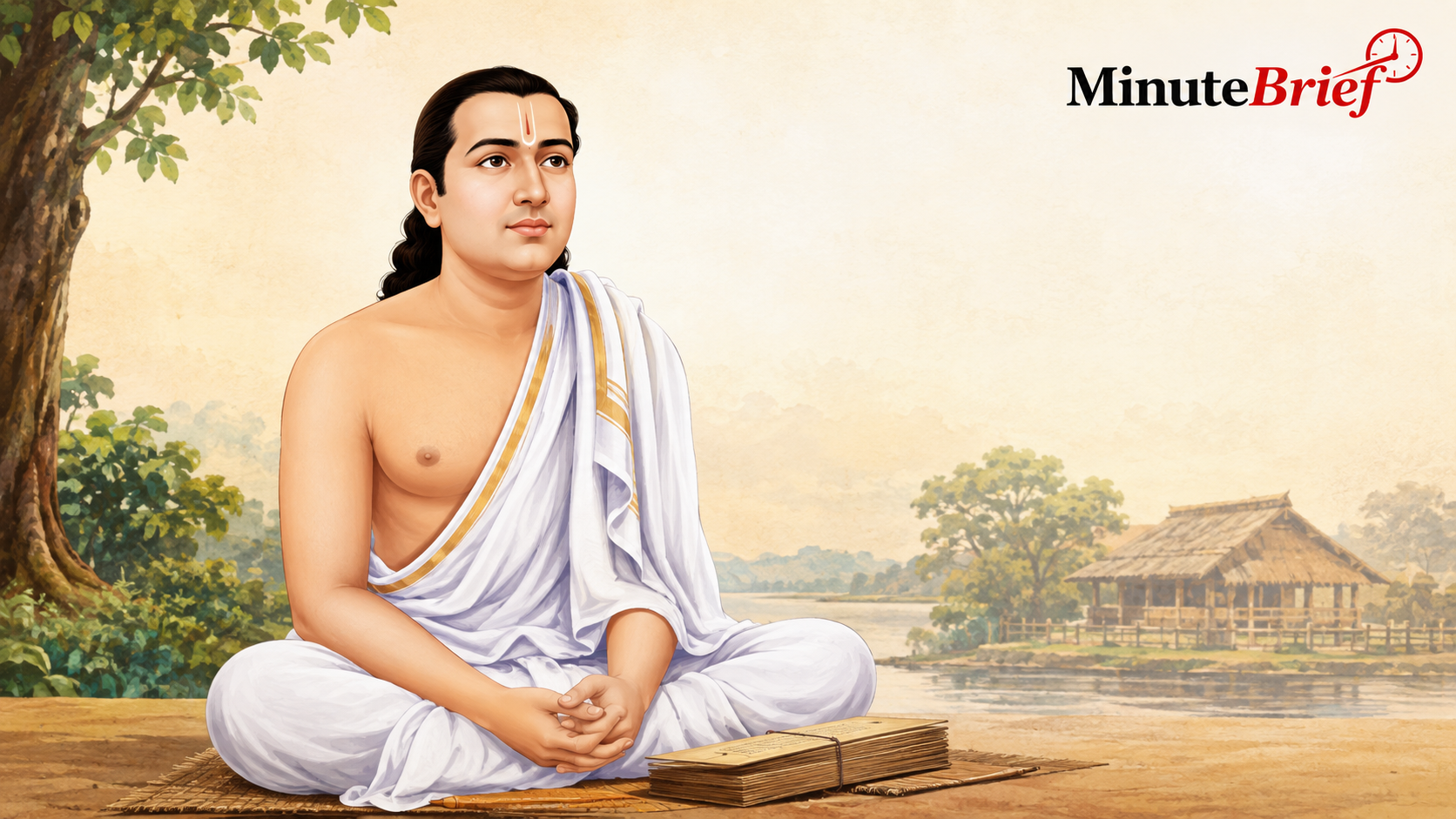
We worship them as goddesses, celebrate them as symbols of strength and invoke nari shakti whenever we speak about the greatness of our culture. Durga, Lakshmi and Saraswati are worshipped across the country. We grow up hearing that women are to be respected and protected.
Yet, when the woman is no longer an idol but an ordinary person walking on a road, travelling to college, returning from work or coming back from tuition, that reverence often seems to disappear.
The recent incident in Jamui, Bihar, is another uncomfortable reminder of this contradiction.
On September 19, two Class 10 students were stopped by a group of youths while returning from coaching. The girl was allegedly harassed and assaulted, while the boy accompanying her was also assaulted. Videos of the incident later circulated on social media, prompting police action. The police registered cases under provisions of the POCSO Act and the Bharatiya Nyaya Sanhita, and several people were arrested.
But perhaps the most disturbing question is not only what happened in Jamui.
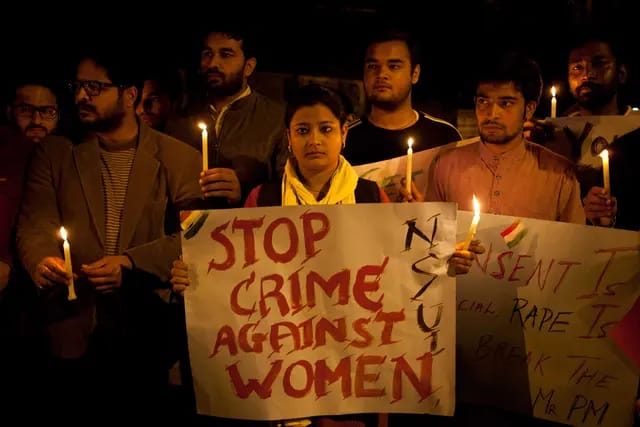
It is why, every time another such incident happens, our reaction increasingly resembles the same cycle: outrage, headlines, political statements, arrests — and then, eventually, another case takes its place.
Because there are simply too many cases.
According to NCRB data, 32,032 rape cases were registered across India in 2019. There were 28,046 in 2020 and 31,677 in 2021.
And rape is only one category.
The NCRB recorded 405,326 crimes against women in 2019. That figure rose to 428,278 in 2021 and 445,256 in 2022. These figures cover a much wider range of offences and therefore should not be treated as rape statistics, but they demonstrate the scale of reported crime against women.
The numbers become even more striking when we look at offences involving assault and harassment. NCRB figures recorded 82,235 cases of assault on women with intent to outrage her modesty in 2014, followed by 82,422 cases in 2015.
These are not merely numbers in an annual government report.
Every number represents a complaint. Behind every complaint is a person. And behind that person is a life that may never return to what it was before the incident.
Yet somewhere along the way, we have become accustomed to the numbers.
A rape case appears on our phones. We read it for a few minutes.
A girl is harassed in public. We watch the video.
A woman is assaulted. We demand arrests.
Then the next headline arrives.
This normalisation is perhaps more dangerous than our momentary outrage.
The Jamui incident also raises another uncomfortable issue: the role of spectators and technology. According to police, videos of the incident circulated online, and authorities identified numerous URLs carrying the material while warning people against further circulation because of the minor's privacy.
In other words, even after a woman or girl has been subjected to humiliation, the ordeal can continue through screens.
And this brings us back to the contradiction at the heart of Indian society.
We are comfortable worshipping the idea of a woman.
We are less consistent about respecting an actual woman.
We celebrate Devi.
But do we respect the girl who says no?
We praise Nari Shakti.
But do we respect a woman who chooses her own clothes, friends, career, partner or way of living?
We teach our daughters how to stay safe.
Don't come home late.
Don't travel alone.
Don't trust strangers.
Keep your phone charged.
Share your location.
But how often do we ask a much simpler question:
Why are we teaching women so many ways to avoid danger instead of teaching society not to create that danger in the first place?
Of course, crime statistics must be read carefully. An increase in registered cases does not necessarily mean that every underlying form of crime has increased by exactly the same proportion. Greater awareness, willingness to report, easier registration of complaints and changes in policing can all affect recorded numbers. The government itself has noted that increased reporting can be associated with measures such as women's helplines, emergency response systems, Zero FIR and e-FIR mechanisms.
But that qualification should not become an excuse to ignore the problem.
Whether a woman is assaulted in a crowded street or behind a closed door, whether she reports it immediately or years later, the fundamental question remains the same:
Why does she have to live with the possibility of it happening at all?
India does not need more symbolic respect for women.
It needs everyday respect.
It needs safer public spaces, responsive policing, timely investigation, effective prosecution, awareness about consent and boundaries, and a social environment in which harassment is not dismissed as masti, mazaak, ladkon se galti ho gayi, or simply “another case.”
Because a woman should not have to become a goddess before society decides that she deserves dignity.
She is not a goddess.
She is a daughter, a student, a worker, a friend, a mother, a citizen — and simply a human being.
And perhaps that is the uncomfortable truth we need to confront.
We have spent centuries learning how to worship women.
Maybe it is time we learned how to respect them.