In Brief
- Seven vessels transited the Strait of Hormuz on October 6, lowest since July 23.
- Decline follows recent attacks on vessels, raising security concerns.
- Strait remains critical for global oil supply and commodity shipments.
- Lower transit traffic signals regional instability impacting maritime trade.
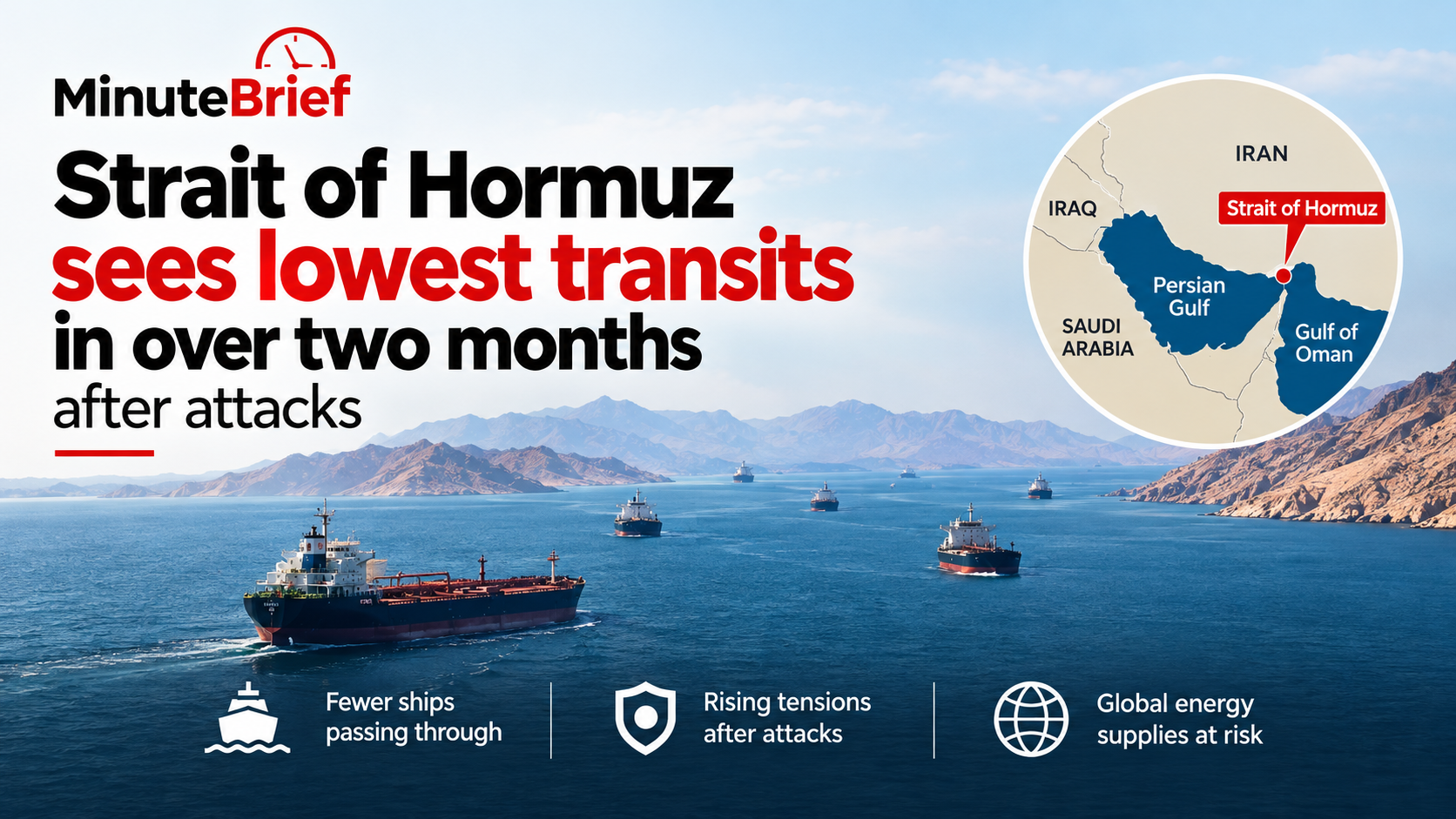
Transit traffic through the Strait of Hormuz, a key maritime chokepoint for global oil shipments, hit its lowest level since late July on Tuesday, October 6, 2026. Analytics firm Kpler reported that only seven commodity vessels passed through the strait that day, a significant reduction attributed to recent attacks on vessels in the region.
The decline in transit volume comes amid heightened security concerns following a series of incidents targeting ships navigating the strait, which links the Persian Gulf with the Gulf of Oman and the Arabian Sea. These attacks have disrupted maritime operations and prompted caution among shipping companies and oil exporters relying on the route.
The Strait of Hormuz remains a vital corridor for global energy markets, with an estimated one-fifth of the world's petroleum passing through it daily. Any reduction in vessel traffic can signal elevated risks to supply chains and market stability.
Authorities are monitoring the situation closely as geopolitical tensions persist, and stakeholders in the global shipping industry are urged to maintain vigilance to ensure safe navigation through this strategic waterway.