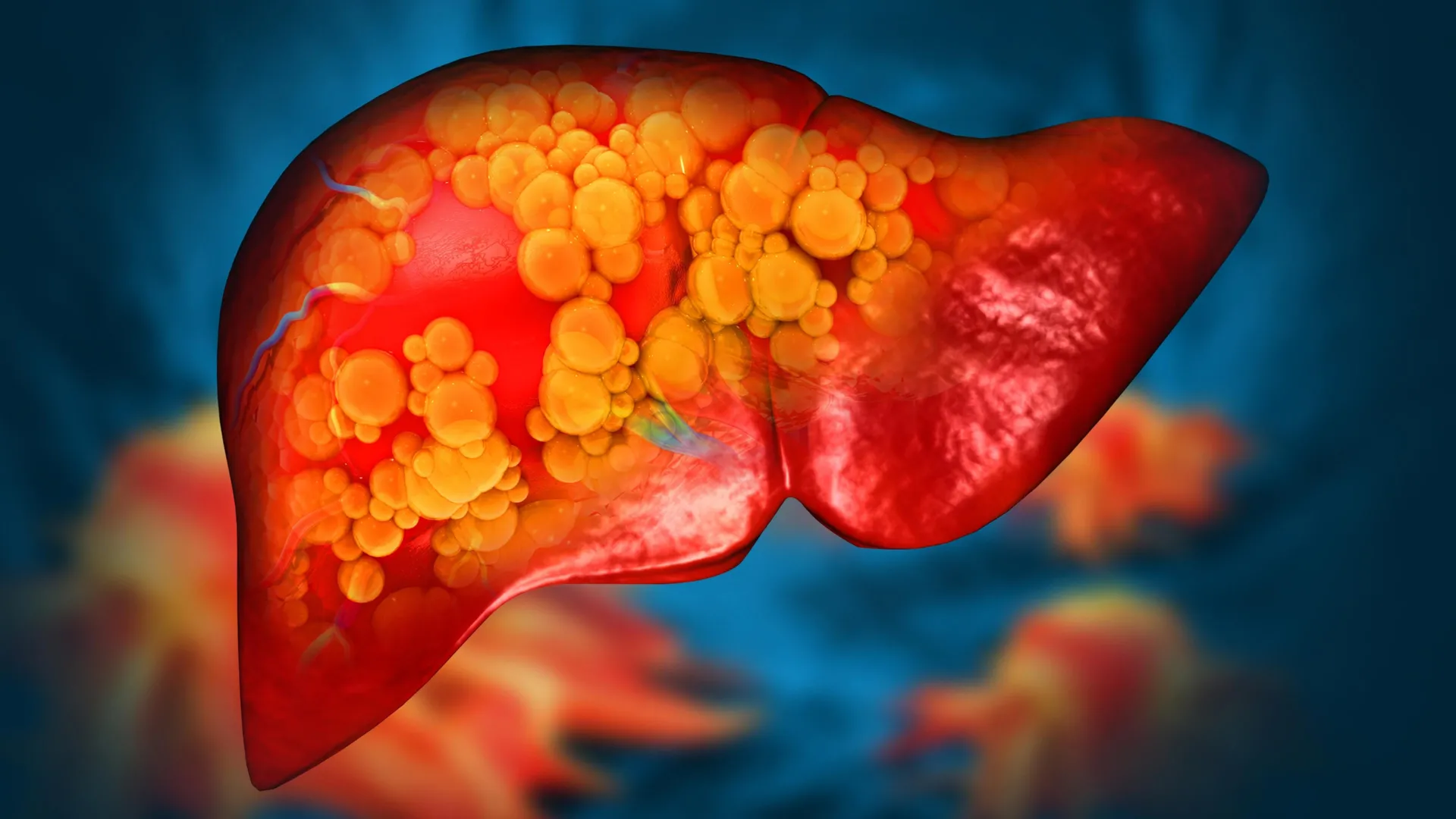
The liver is famous for its ability to repair itself. However, for people with severe alcohol-related liver disease, that repair system can completely stall—even long after they stop consuming alcohol.
A new study published in Nature Communications by researchers at the University of Illinois Urbana-Champaign, Duke University, and the Chan Zuckerberg Biohub Chicago reveals why this breakdown happens and how it might be reversed.
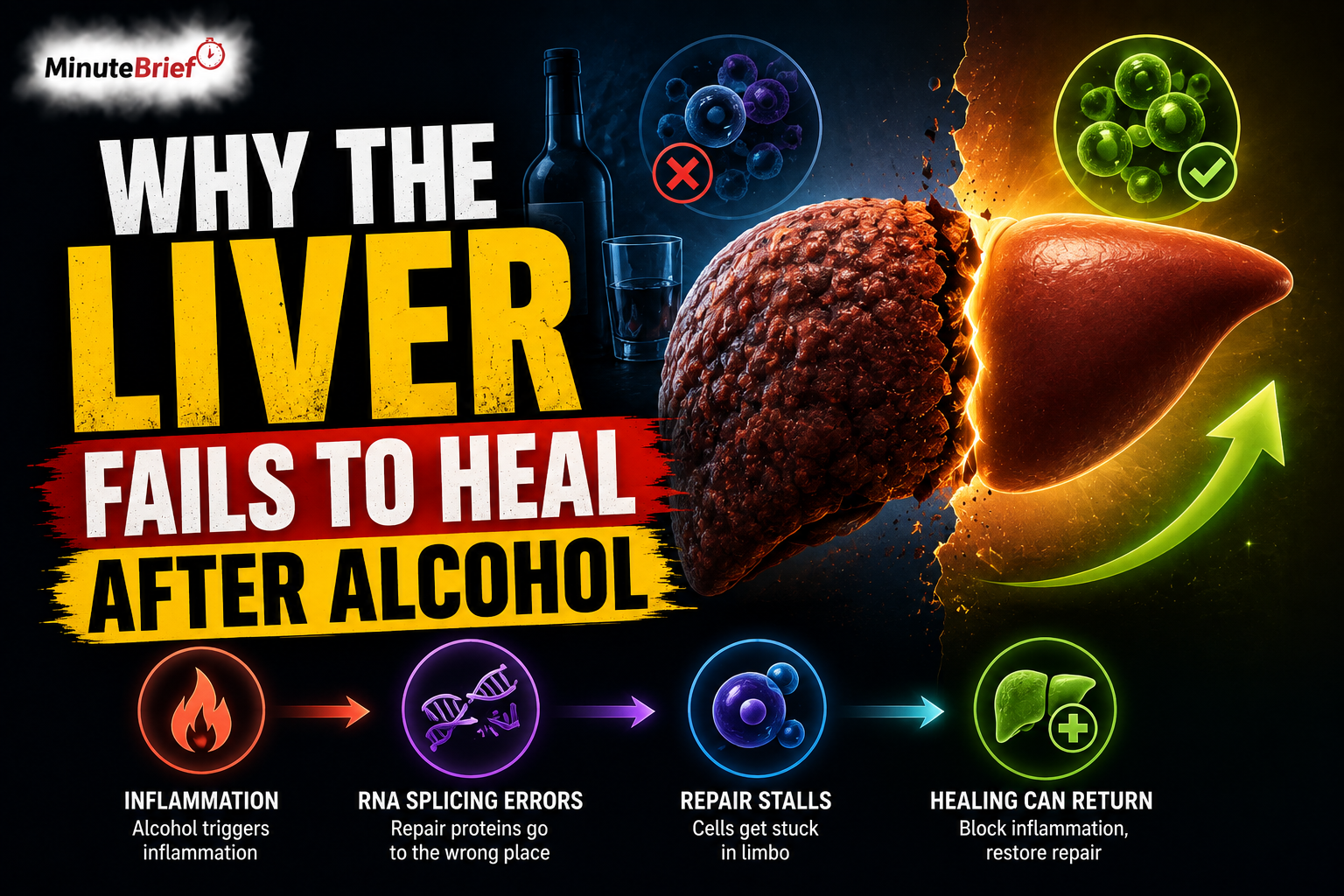
- Trapped in "Limbo": To repair damage, liver cells normally revert to a less specialized, "fetal-like" progenitor state to divide before maturing again. In alcohol-damaged livers, cells start this transition but get stuck halfway as unproductive "quasi-progenitors"—unable to function normally or finish regenerating.
- RNA Splicing Errors: The team found widespread errors in RNA splicing (the editing process that turns genetic instructions into proteins). Low levels of a key protein called ESRP2 cause repair proteins to miss their destination, getting stuck in the cell's cytoplasm instead of the nucleus where they are needed.
- Driven by Inflammation: Alcohol-induced inflammation suppresses ESRP2. When researchers blocked specific inflammatory signals in lab tests, ESRP2 levels recovered, RNA splicing normalized, and cells resumed proper repair.
- Future Potential: Blocking these inflammatory pathways could pave the way for non-surgical treatments to restart liver healing, while mis-spliced RNA molecules could serve as early diagnostic markers.
Source: Science Daily