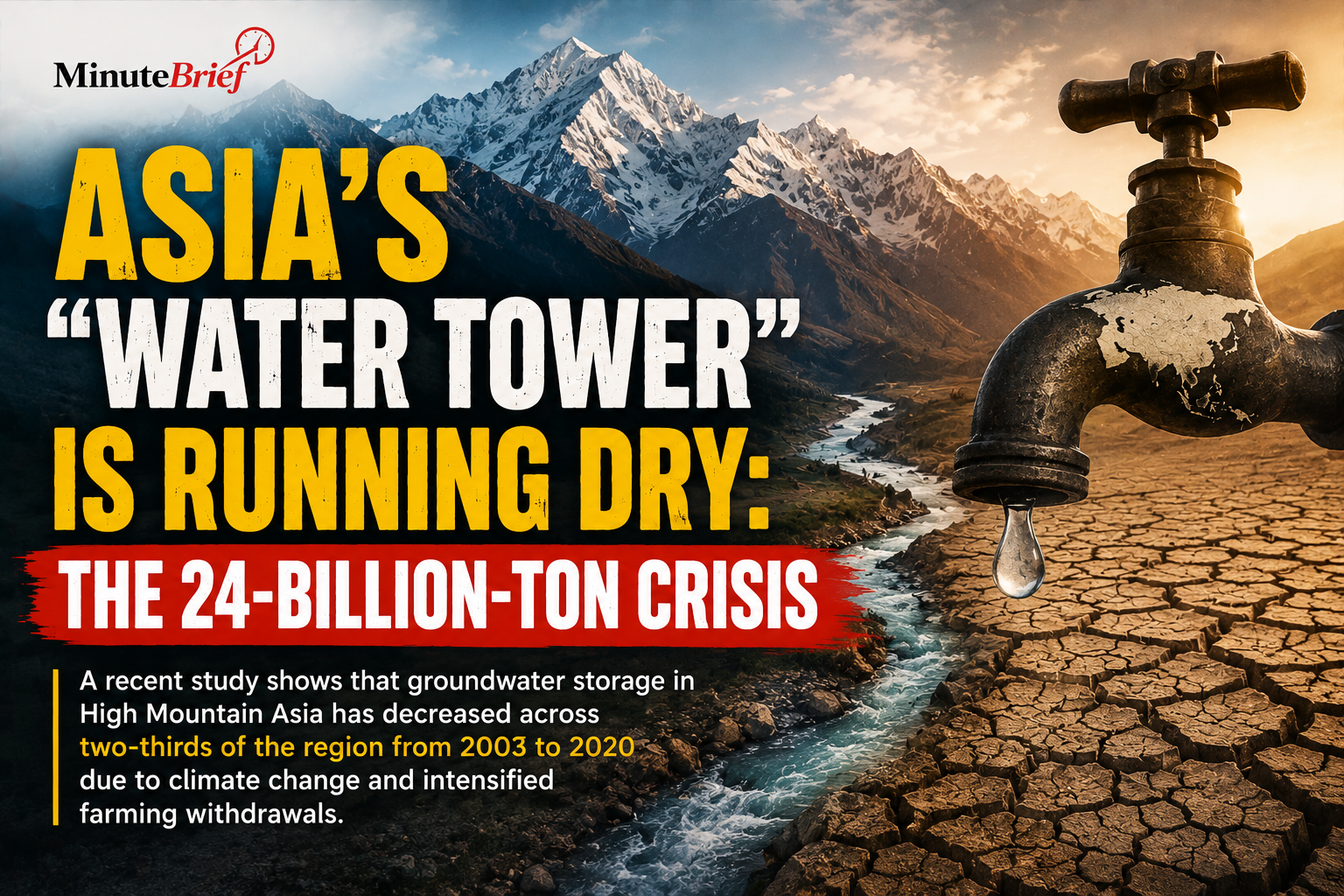
High Mountain Asia—the "Asian Water Tower"—supplies fresh water to over a dozen countries. However, a satellite-based study published in Environmental Research Letters reveals these underground reserves are shrinking by 24.2 billion tonnes every year.
Key Findings
- Widespread Loss: Between 2003 and 2020, nearly two-thirds of the region suffered declining groundwater storage.
- Farming Impact: The steepest drops hit heavily populated, agricultural river basins like the Indus, Ganges-Brahmaputra, and Amu Darya.
- Human Activity: While changing climate accounts for roughly half of the shift, human water extraction for farming has accelerated losses sharply since 2010.
AI Tracking & Future Outlook
Researchers at the Chinese Academy of Sciences used an AI-powered framework combining 20 years of satellite data and Earth system modeling to track underground water dynamics across rugged mountain terrain.
While increased glacier melt could temporarily cushion groundwater drops around the 2060s, this effect is strictly short-term. Once glacial runoff peaks, depletion will accelerate rapidly without major changes in regional water management.
Source: Science Daily