When thinking about staying healthy as we age, standard advice usually points to walking, cycling, or swimming. But research shows that cardiorespiratory fitness is only half the battle. Preserving muscle strength is one of the most effective tools for maintaining mobility, balance, and independence late in life—and you don't need to live in the gym to see results.
The Hidden Threat: Sarcopenia
As we grow older, our bodies naturally lose muscle mass and strength—a condition known as sarcopenia. Muscle loss does more than just affect physical appearance; it directly impacts daily life.
- Essential Daily Tasks: Strong muscles are required to rise from a chair without help, climb stairs, carry grocery bags, and recover after an illness or injury.
- Higher Risk of Falls: Weaker leg and core muscles reduce stability, significantly increasing the likelihood of dangerous falls and fractures.
- Widespread Impact: Sarcopenia affects a large portion of adults over 70, with even higher risks for individuals living with multiple long-term health conditions.
Why Strength Training is Key
While walking or running builds heart and lung health, resistance training works directly against a force to rebuild muscle fibers. This includes:
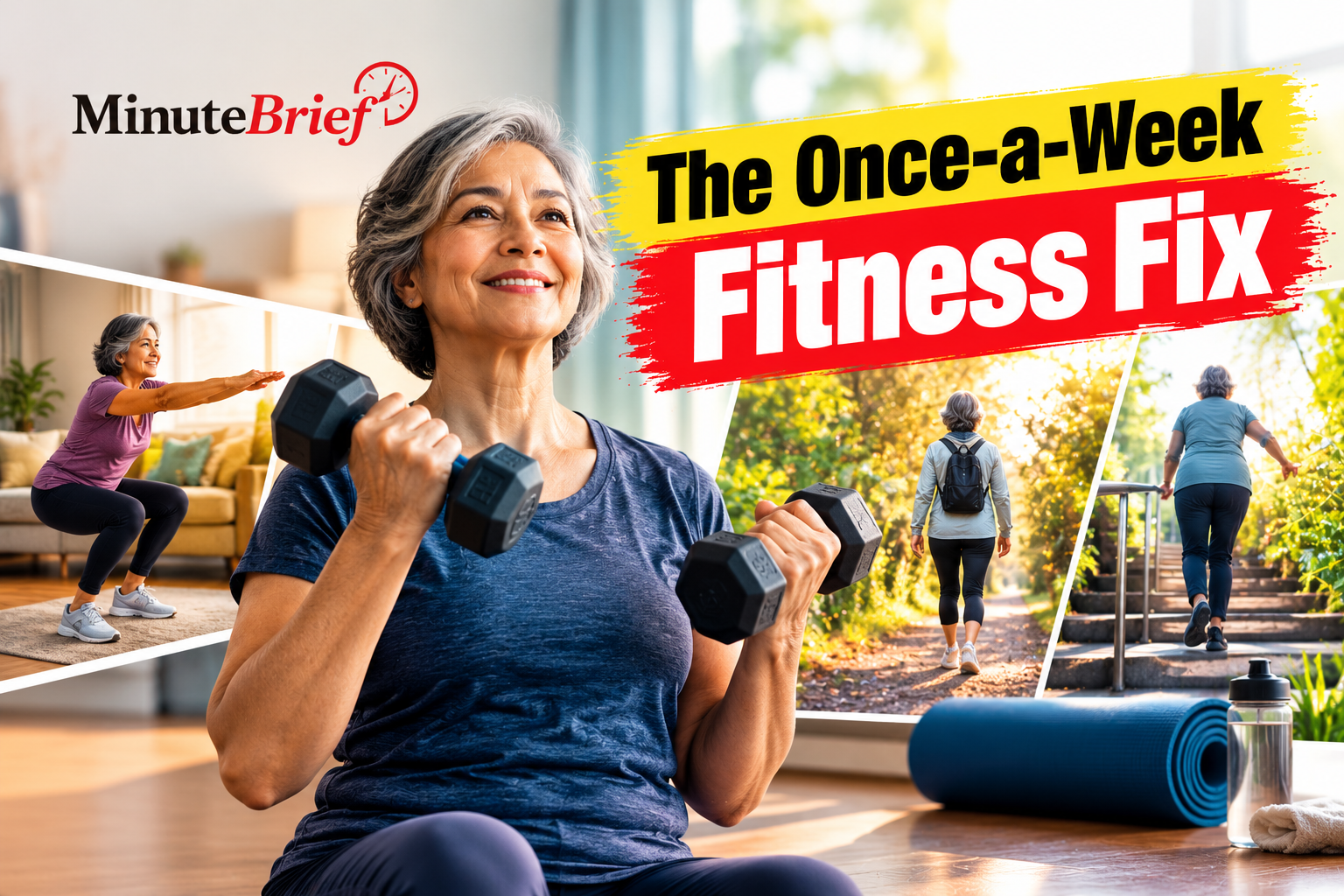
- Lower-Body Movements: Exercises like squats, step-ups, or leg presses support the key muscles needed for standing up and walking confidently.
- Upper-Body Movements: Exercises targeting the back, chest, and arms help maintain posture and support everyday lifting tasks.
Crucially, building muscle doesn't require lifting massive weights. Performing 20 to 25 repetitions with lighter weights or body weight can deliver similar benefits to heavier lifts, provided the set is pushed until your muscles feel tense and fatigued. Combining training with adequate protein intake gives your muscles the essential building blocks to repair and grow.
Just Once a Week Makes a Difference
One of the biggest misconceptions about resistance exercise is that it requires a daily commitment. Evidence indicates that just a single workout per week can yield meaningful gains in strength, especially for beginners.
Starting slowly at home using simple body-weight movements allows anyone to build strength safely at their own pace. Regardless of age—whether in your 50s, 70s, or even 90s—it is never too late to start strengthening your body and protecting your independence.