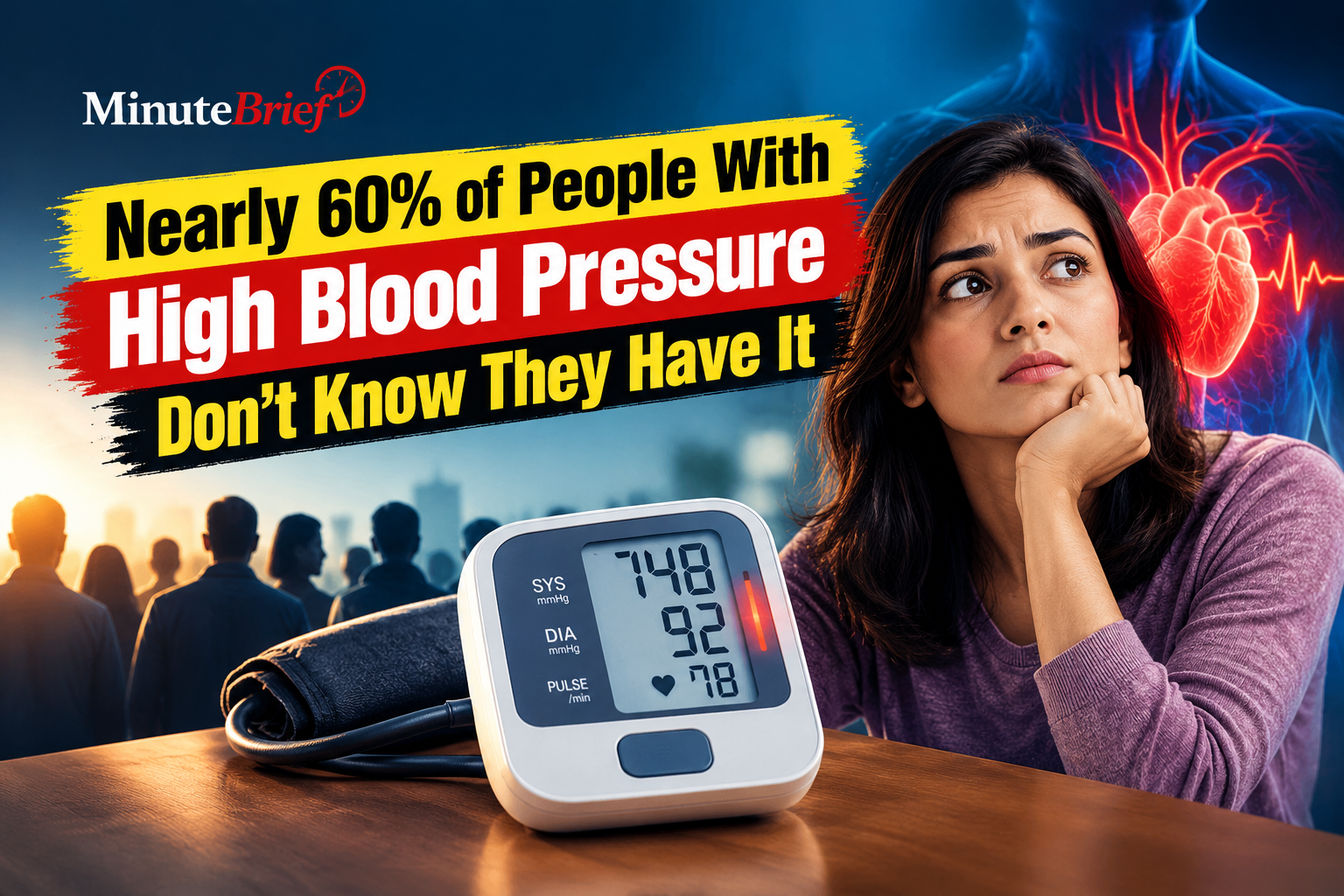
Nearly 60% of people with high blood pressure don't even know they have it. A major Oxford-led study reveals that hypertension remains a widely undetected, untreated, and poorly managed "silent killer"—even among young adults and those already taking medication.
The Scope of the Problem
Researchers at Oxford Population Health analyzed clinic blood pressure readings from 1.4 million adults in England as part of the Our Future Health research program. Using World Health Organization (WHO) standards, hypertension was defined as a systolic reading of 140 mmHg or higher, a diastolic reading of 90 mmHg or higher, or current use of blood pressure-lowering medication.
- Over 1 in 3 Adults Affected: Overall, 37% of participants met the criteria for hypertension.
- Rates Skyrocket With Age: While 15% of adults aged 18 to 39 had high blood pressure, that number rose to 71% among those aged 80 and older.
- Higher Prevalence in Men: Men were almost 50% more likely than women to have hypertension (42% vs. 29%).
The Hidden Danger: Undiagnosed and Uncontrolled
The study highlighted two glaring gaps in public health awareness and management:
- 59% Are Unaware: Nearly 6 in 10 participants with high blood pressure had never received an official diagnosis and were not taking medication.
- Medication Isn't Always Enough: Among those already taking blood pressure medication, 50% still had elevated readings ($140/90\text{ mmHg}$ or higher).
"While hypertension is largely a 'silent killer,' the current approach to detecting and treating high blood pressure is not fit for purpose... Even among younger adults, who currently aren't eligible for routine NHS Health Checks, over 15% already had high blood pressure."
— Wenyu Liu, Lead Author & Medical Statistician at Oxford Population Health
Why Current Screening Methods Fall Short
The researchers argue that existing clinical guidelines—such as those requiring multiple confirmatory appointments and trial periods of lifestyle changes before starting medication—may delay critical care. Because high blood pressure rarely shows obvious symptoms, waiting for routine checkups leaves millions vulnerable to preventable cardiovascular events.
Key Recommendations from Experts:
- Proactive Screening: Expand blood pressure checks across broader population groups, including younger adults.
- Risk-Based Treatment: Initiate treatment based on overall predicted risk for cardiovascular disease, rather than relying solely on single blood pressure thresholds.
- Rethinking Follow-Ups: Provide better long-term monitoring to ensure medications successfully bring blood pressure down to target levels.
What You Can Do
Because high blood pressure is the leading modifiable risk factor for heart attacks and strokes, regular checks are crucial:
- Get Checked Regularly: Don't wait for symptoms. Ask for a blood pressure test at your local clinic, pharmacy, or test it home.
- Monitor Your Numbers: A normal reading is typically below 120/80 mmHg.
- Follow Up on Medications: If you already take hypertension medication, keep tracking your blood pressure to ensure your current dose is effective.