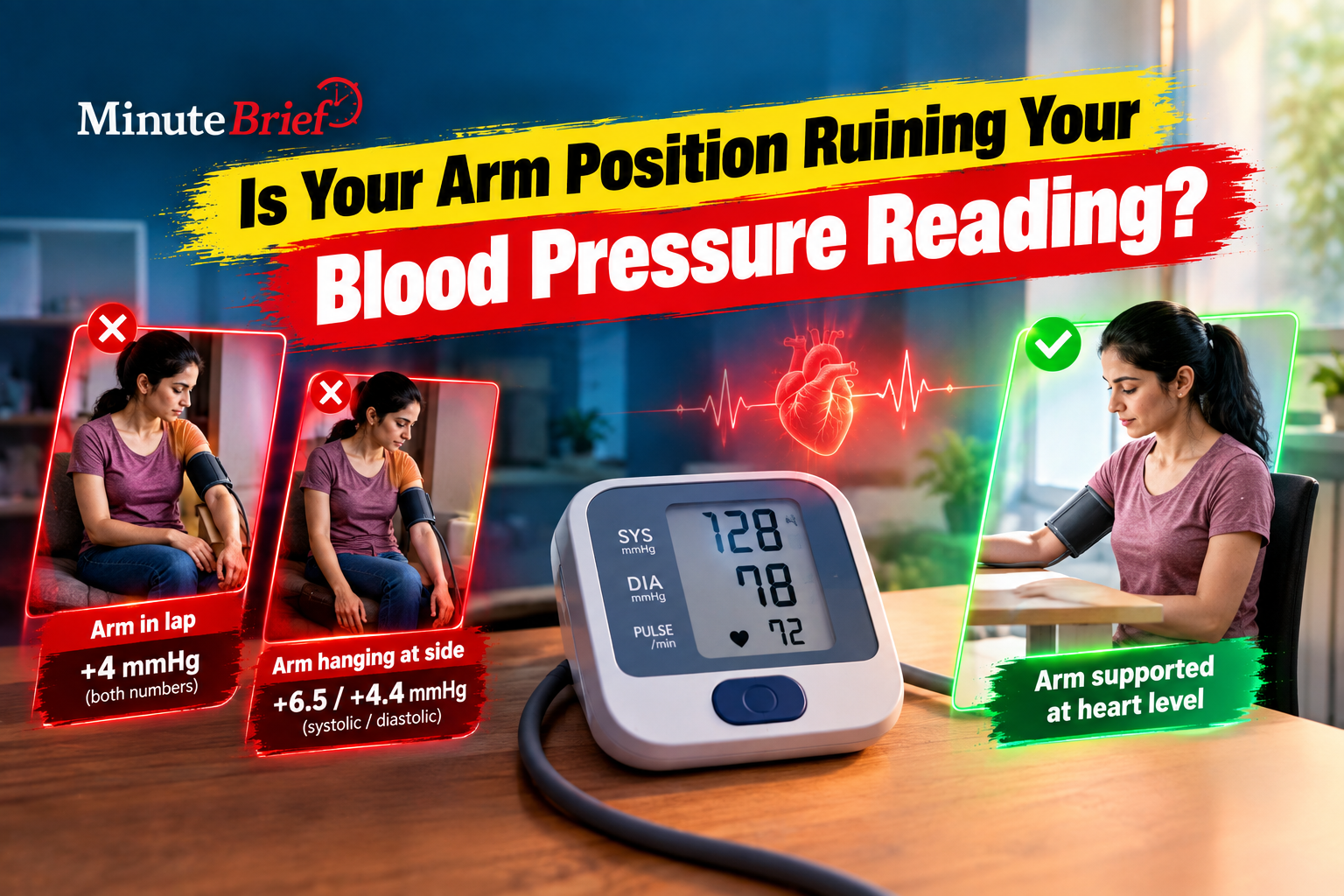
Having your blood pressure checked with an unsupported arm can make your numbers appear dangerously higher than they really are.
A study by Johns Hopkins Medicine published in JAMA Internal Medicine found that improper arm placement during a blood pressure test significantly inflates the results:
- Arm in lap: Adds ~4 mmHg to both top (systolic) and bottom (diastolic) numbers.
- Arm hanging at side: Adds 6.5 mmHg to top pressure and 4.4 mmHg to bottom pressure.
Why It Matters
A 6.5-point jump is enough to misdiagnose someone with Stage 2 hypertension, potentially leading to unneeded prescriptions and anxiety.
How to Get an Accurate Reading
Follow these American Heart Association guidelines next time you take a test:
- Rest your arm: Place it on a desk or table so the cuff sits at heart level.
- Sit properly: Keep your back supported and feet flat on the floor (un-crossed).
- Stay still & quiet: Avoid talking or using your phone, and rest for a few minutes before starting.